SIGNS OF TROUBLE: The Story Behind the Anti-Tibetan-Buddhist Slogans

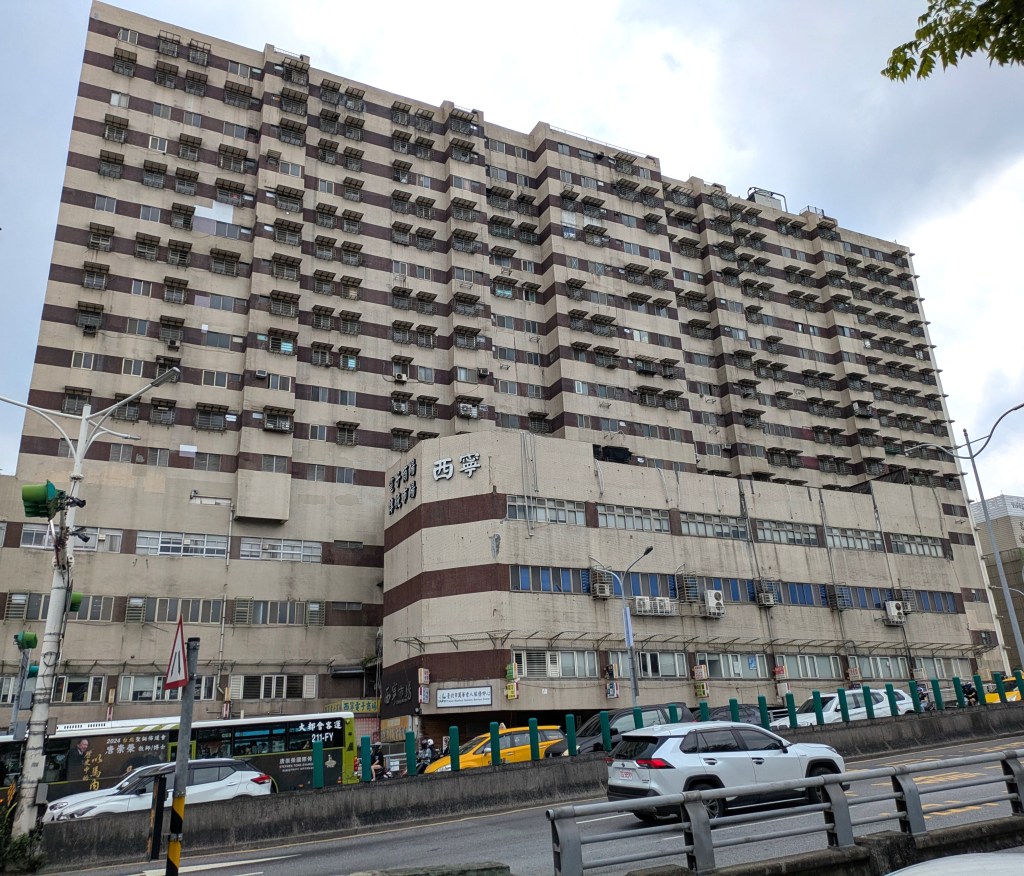
ANTI-TIBETAN-BUDDHIST SIGNS AND UNRELATED BANNERS ON TEPA’S BUILDING NEAR YUANSHAN MRT IN TAIPEI

They are hard to see now, as they are blocked from view by a new building under construction, but for almost 15 years those eccentric signs on the side of a 10-story building next to Yuanshan Station caught my eye as I rolled past on the Taipei MRT. 

“The Highest Yoga Tantra cultivated by lamas is essentially a yab-yum practice of sex,” says one. “Tibetan Buddhism is definitely not Buddhism and the lamas are definitely not Buddhist monks or nuns,” reads another. Say what?

Were they put up by a supporter of the Chinese Communist Party, out to damage the Tibetan brand? No! The real story, as I discovered, was that they were put up by the True Enlightenment Practitioners Association (TEPA), a non-political, Taiwan-based Buddhist organization, which owns several floors in the building.

The group’s leader, Xiao Pingshi, is known for his strong doctrinal views on Buddha’s true teachings, sometimes ruffling the feathers of other Buddhist groups.

But it was TEPA’s accusations of improper sexual behavior by Tibetan lamas with their disciples which created the most controversy, culminating in a 55-day jail sentence for Xiao Pingshi for defaming the Dalai Lama during his visit here in 2009.

However, all that was just a tempest in a teacup compared to the real sex abuse scandals that have rocked the Tibetan Buddhist community worldwide over the last few decades, which even some Tibetan Buddhists accuse the Dalai Lama of knowing about for years and failing to confront.

Could Xiao Pingshi and his followers actually have a valid point?

Dharma Disruptor

Tibet has had a very positive image in the west, starting with the Dalai Lama’s flight from communist-occupied Tibet in 1959 to Dharamsala, India, where he started his Tibetan government in exile.

Many Westerners discovered Tibetan Buddhism—along with other Eastern religious philosophies—traveling the Hippy Trail from Europe to India in the 1960s and 70s. This Western search for Eastern enlightenment was popularized by the Beatles. 

When the Dalai Lama was awarded the 1989 Nobel Peace Prize, the Tibetan exile community, with its constellation of Buddhist and free-Tibet activist groups around the world, became an iconic symbol of enlightenment and the fight against oppression.
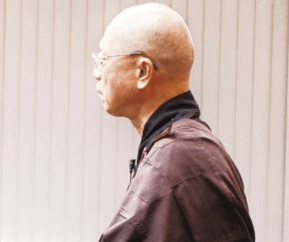
XIAO PINGSHI

Who then, other than the Chinese Communist Party of course, would dare attack them?

Enter Xiao Pingshi, born Xiao Xieren in 1944 into a Buddhist farming family in Changhua, Taiwan. After his military service, he moved to Taipei and started a law firm.

In 1985, he dedicated himself completely to Buddhism, studying and practicing several methods for five years, until, according to TEPA’s website, he achieved enlightenment. In September 1997, he founded the True Enlightenment Practitioners Association (TEPA) in Taipei.

(Xiao Pingshi per TEPA https://www.enlighten.org.tw/master-pingsxiao)

Since the 1950s, most of the various Buddhist branches and schools have generally adopted a diplomatic and collaborative approach toward each other. Xiao Pingshi—a prolific author of over 200 books on Buddhism—is an exception.

In Collected Doctrinal Critiques of the True Enlightenment Practitioners Association, Xiao called the practice of Chan Buddhism as taught by Dharma Drum Mountain a “false dharma,” and derided Fo Guang Shan’s brand of humanistic Buddhism as “worldly,” “superficial,” and “pseudo-Buddhism.” These are two of the largest and most influential Buddhist organizations in Taiwan.

TEPA publications assert that only Xiao Pingshi teaches the true dharma. Comments in online Buddhist forums have described TEPA as a closed doctrinal system that delegitimizes all other paths. His critics basically say: Who does he think he is, Buddha?

In 2003, the Tibet Religious Foundation of His Holiness the Dalai Lama—the Tibetan government-in-exile’s representative office in Taiwan—accused the group of spreading communist propaganda against Tibetan Buddhism, which TEPA denied, plausibly: the group has since been banned in China.

The vast majority of Taiwanese were oblivious to all this, and if they had been aware, would likely have laughed it off as mere theological squabbling.

But things started to heat up when TEPA’s criticisms directly targeted the Dalai Lama himself when he visited Taiwan in the wake of Typhoon Morakot.

The deadliest cyclone in Taiwan’s recorded history, Morakot slammed into southern Taiwan on August 7, 2009, causing 677 confirmed deaths, with 474 people killed by a landslide in Xiaolin Village, in a rural area of Kaohsiung.
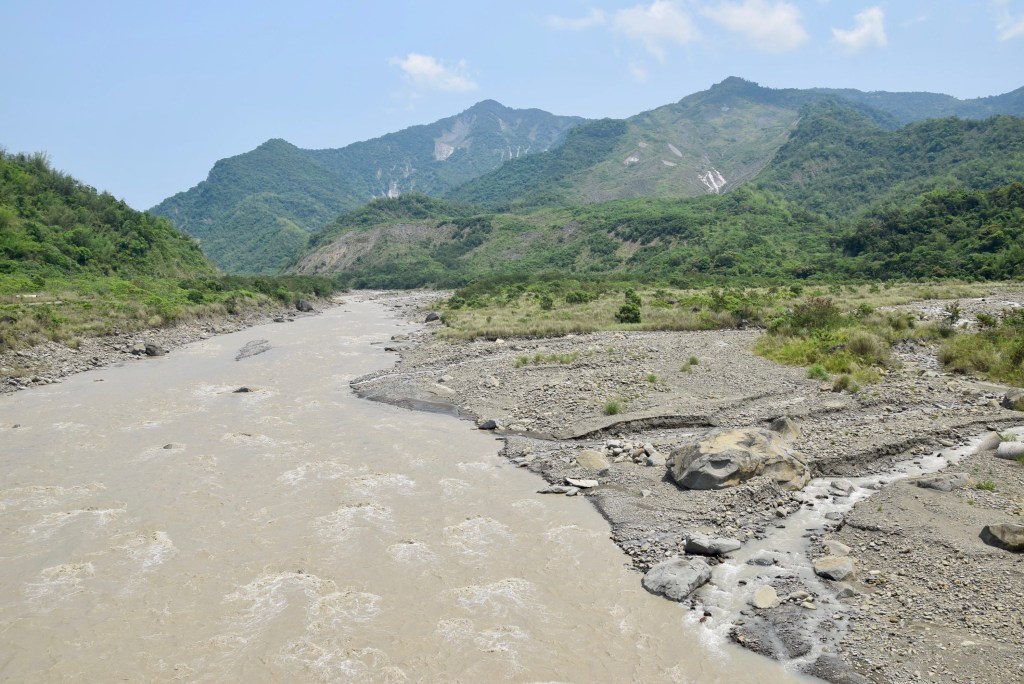
SITE OF FORMER XIAOLIN VILLAGE
Photo by bellenion – Own work, CC BY-SA 4.0, https://commons.wikimedia.org/w/index.php?curid=65358043

The Tibetan leader visited later that month to say prayers and offer spiritual comfort to those affected. Most Taiwanese appreciated the gesture, especially those in the storm-ravaged south.

But as he conducted his prayer meetings, TEPA members were distributing leaflets in Taipei and Kaohsiung accusing him of promoting “tantric sex,” “false dharma,” and “demonic teachings.” TEPA also accused him of using his visit to Taiwan as a hypocritical attempt to rake in donations.

In November, 2010, the signs appeared on TEPA’s building on Chengde Road. Locals in the neighborhood were at first shocked, thinking they were promoting rather than warning against sexual practices in Buddhism.

But a community outreach program—and a warning to the building management committee not to take the signs down or face legal action—meant that they stayed up. Taipei City took no official action against TEPA.

In 2012, however, the Taipei District Court found Xiao Pingshi guilty of defamation for his 2009 comments against the Dalai Lama, and he was sentenced to 55 days in jail, convertible to a fine.  

(Buddhist News World blog article https://blog.udn.com/acewang3005/6875237)

After losing an appeal to the supreme court, TEPA was forced to make an official “clarification”—not an apology, they insist—but have carried on with their anti-Tibetan-Buddhism polemics to this day.

Hot Yoga

So, what exactly is Xiao Pingshi’s problem with Tibetan Buddhism?
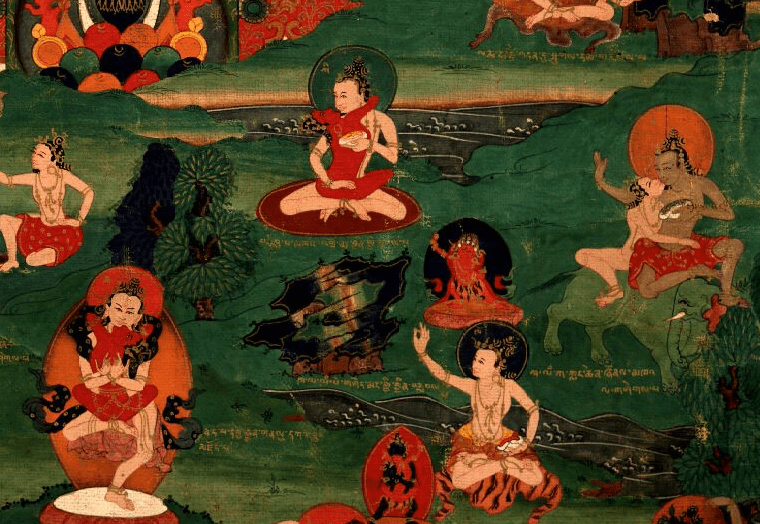
TIBETAN BUDDHIST PAINTING DEPICTING MAHASIDDHAS AND YOGINIS PRACTICING KARMAMUDRA
By Gelug Lineage – http://www.himalayanart.org/image.cfm/972.html
https://commons.wikimedia.org/w/index.php?curid=94466703 

The core issue is the inclusion of tantric practices. Tantrism originated in medieval India, and its infusion into Buddhism produced the form of Tantric Buddhism known as Vajrayana, prevalent in Mongolia, Bhutan, and Tibet.

It includes elements such as mantras and mandalas, intended to alter consciousness and offer a faster path to enlightenment. But It also has a sexy side.

Yab-yum (literally “father-mother” in Tibetan) is a visual representation of a male deity in union with his female consort. It symbolizes the union of female (symbolizing wisdom) and male (symbolizing compassion and skill), a foundational concept of tantrism.

Karmamudra refers to a tantric technique involving sexual yoga with a consort, either physical or visualized. It can be considered the physical embodiment of the yab-yum ideal, where the practitioner uses desire as a path to spiritual realization, not for erotic pleasure. (Hmm…)

The practice is to be done only by advanced practitioners, who are supposed to avoid normal orgasm, especially ejaculation.
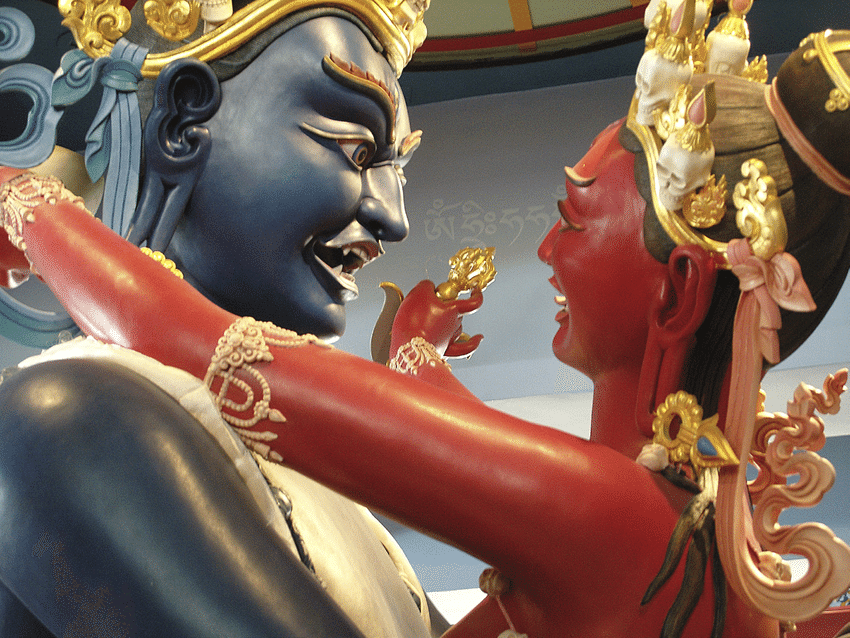
DIVINE BLISS: CAKRASAMVARA AND VAYRAYOGINI
Photograph by Greg Smith.
https://creativecommons.org/licenses/by/4.0/

For Xiao Pingshi and TEPA, the inclusion of tantric sexual practice totally disqualifies Tibetan Buddhism as a legitimate form of Buddhism.

Kristen, a member of TEPA’s English team, told me over cakes and coffee in the TEPA HQ’s basement lounge: “If they didn’t call themselves Buddhist, we wouldn’t comment on them.”

Lily, a dharma teacher for TEPA, made the point: “The teacher and disciple face each other naked. Are we to believe they don’t have sex?”

Even for those willing to accept Tantric Buddhism, ethics would require that the practices be consensual. As it turns out, this was far too often not the case.

Creepy Holy Men

It is well known that over the last few decades, investigations by media and NGOs have exposed numerous sex abuse cases in religious organizations. The Catholic Church is the most notorious for this.

On a smaller scale, similar revelations have emerged within other religious groups, including the Anglican Church, certain evangelical Christian denominations, Orthodox Jewish communities, Islamic madrasas, the Jehovah’s Witnesses, the Sikh community, and with some Hindu gurus.

Within the worldwide Buddhist community, it is the Tibetan Buddhists that have been most rocked by sexual scandals.

Here are just a few major examples:

Osel Tendzin and Vajradhatu

Osel Tendzin, real name Thomas Rich, (1943 – 1990), was the first Western dharma heir of Tibetan Buddhist master Chogyam Trungpa, himself known for alcohol use and sexual activity with students.

Osel Tendzin led a school in California called Vajradhatu, the precursor to Shambhala International, after Trungpa’s death in 1987.

Tendzin knowingly engaged in unprotected sex with male students while HIV-positive, without disclosing his status. At least one student died from AIDS-related complications.

The community was deeply shaken, especially as senior leaders were reportedly aware of the situation but failed to intervene.

(Tendzin’s obituary: https://www.latimes.com/archives/la-xpm-1990-08-27-mn-27-story.html)

Sogyal Rinpoche and Rigpa

Sogyal Rinpoche (1947–2019) was the founder of Rigpa, a global network of Tibetan Buddhist centers.

He gained prominence through his book The Tibetan Book of Living and Dying, widely read in the West.
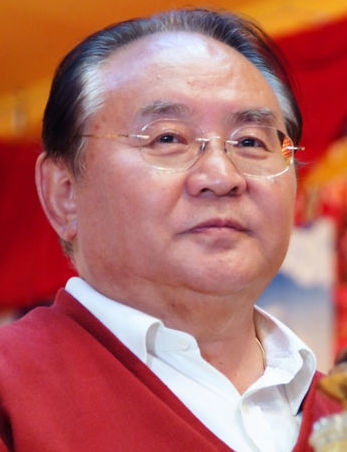
Accusations of sexual, physical, and emotional abuse spanned decades, with reports dating back to the 1970s. A 1994 lawsuit, which was settled out of court, alleged manipulation and assault under the guise of spiritual instruction.

In 2017, eight senior Rigpa students published an open letter detailing systemic abuse and manipulation, allegations confirmed by an independent report commissioned by Rigpa.

Senior Rigpa members were aware of misconduct and failed to act, wishing to avoid reputational damage to their leader and school.

In such cases, students are often afraid to report abusive gurus pushing unwanted sexual activity as “spiritual instruction” because of samaya, or sacred vows of secrecy. Breaking samaya is seen as spiritually catastrophic. Basically, if you rat on your guru, you go to hell—literally.

(Linked below is a powerful 2022 documentary about the abuse at Rigpa and the process of getting accountability.)

Speak No Evil

So where should we look for ethical guidelines for Tibetan Buddhist teachers, safeguards for disciples, and accountability for abusers? How about the Dalai Lama, whose spiritual authority and global profile would ensure that the message rang out, loud and clear.

By 2018, the sex scandals were damaging the reputation of Tibetan Buddhism, so the Dalai Lama began to speak out. But what said wasn’t always very reassuring.

One statement he made that year concerned an incident in which a group of 22 Western Buddhists had met with him in Dharamsala in 1993. They had raised concerns about sexual misconduct in Buddhism. But the Dalai Lama reported that: “I already did know these things, nothing new.”

So, he had known about the problem since before 1993, but had made no powerful public statements or undertaken any initiatives to deal with the issue until 2018. 

That same year, in the Netherlands, he met with victims and simply stated that “religious leaders should pay more attention.”
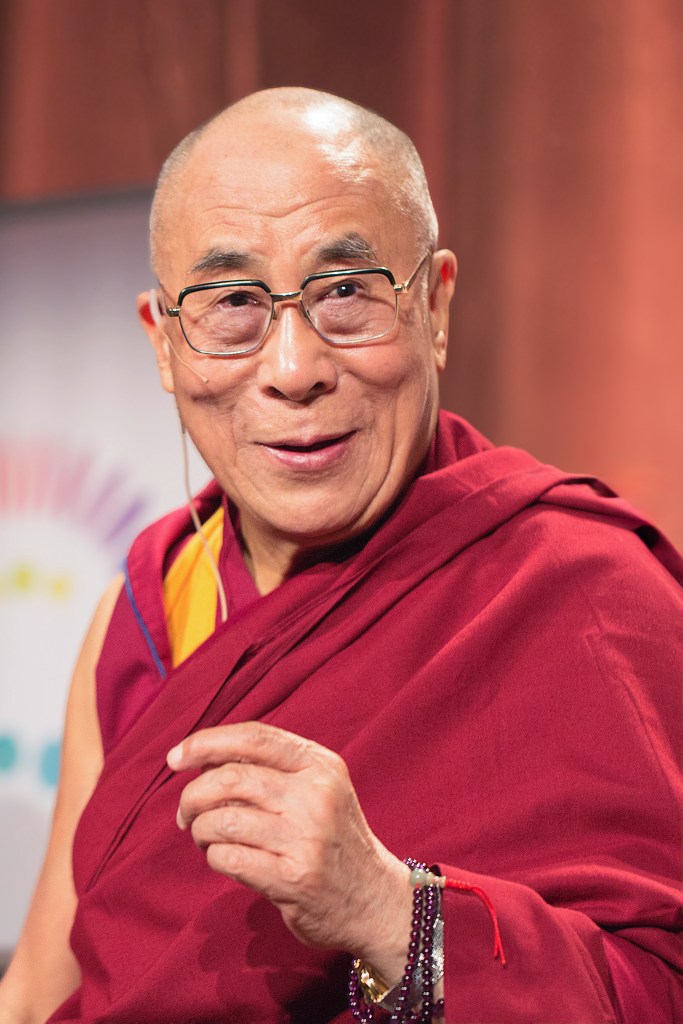
14th DALAI LAMA, TENZIN GYATSO
By Christopher Michel – Own work, CC BY-SA 4.0, https://commons.wikimedia.org/w/index.php?curid=168573481

In addition, to date, investigative reporting and documentaries such as German media outlet DW’s Buddhism and Abuse – The Unspeakable Truth highlight that the Central Tibetan Administration (CTA), remained “stubbornly silent” despite known cases of abuse.

In 2020, the CTA adopted a series of measures to counter sexual and gender-based violence While substantial, these were aimed at the Tibetan community in India and not at Tibetan Buddhist centers abroad.

The cat is out of the bag, however, and many Western Tibetan Buddhist centers have implemented reforms, such as safeguards, reporting systems, and psychological counseling.

A very Western sense of transparency and accountability seems to have enlightened Tibetan Buddhism in dealing with some nasty holdovers from their feudal mountain kingdom.

Concluding Opinion

So, is Xiao Pingshi right about Tibetan Buddhism? In the author’s opinion, No and Yes:

“No” in that this problem is not limited by any means to Tibetan Buddhists, while TEPA’s harshest polemics are.

In the Theravada (think “old school”) Buddhism, sexual abuse of young novices by senior monks has been reported many times in monasteries in Sri Lanka and Thailand.

(Article: Alarm Bells Sounded Over Child Abuse in Thailand’s Buddhist Temples – Buddhistdoor Global)

(Ph.D. Thesis: https://repository.canterbury.ac.uk/item/953w8/breaking-the-silence-about-institutional-child-abuse-in-sri-lanka)

And in the world of American Zen, here is one of several examples: Eido Tai Shimano, a Zen abbot who taught at the New York Zendo and upstate Dai Bosatsu Monastery, was accused of decades of sexual misconduct with female students, including coercive relationships and abuse of power.

But “yes” because the intimacy and power imbalance of the guru-disciple relationship within Tibetan Buddhism, combined with tantric practices, can be an incubator for sexual abuse. It makes it more likely to happen, and harder to report.

Fortunately, there have been are no publicly recorded cases of sexual abuse to date within Taiwan’s large and growing Tibetan Buddhist community, consisting of some 300 Tibetan monks and 250,000 Taiwanese adherents.

One reason for this could be that most of the monks come through for short stays on rotation, limiting the development of close relationships with students.

But it is also possible that TEPA’s anti-Tibetan-Buddhist signs did actually save some vulnerable women from abuse.

Religious leaders and teachers are merely human, after all. The trouble starts when we forget this.

NOTE: The author contacted the Tibet Religious Foundation of His Holiness the Dalai Lama with a request for an interview, and also offered the organization an opportunity to respond to the points in the article or add an official statement to be included therein. However, the organization has so-far not offered any official comment. If they do so in the future, the article will be edited to reflect this.
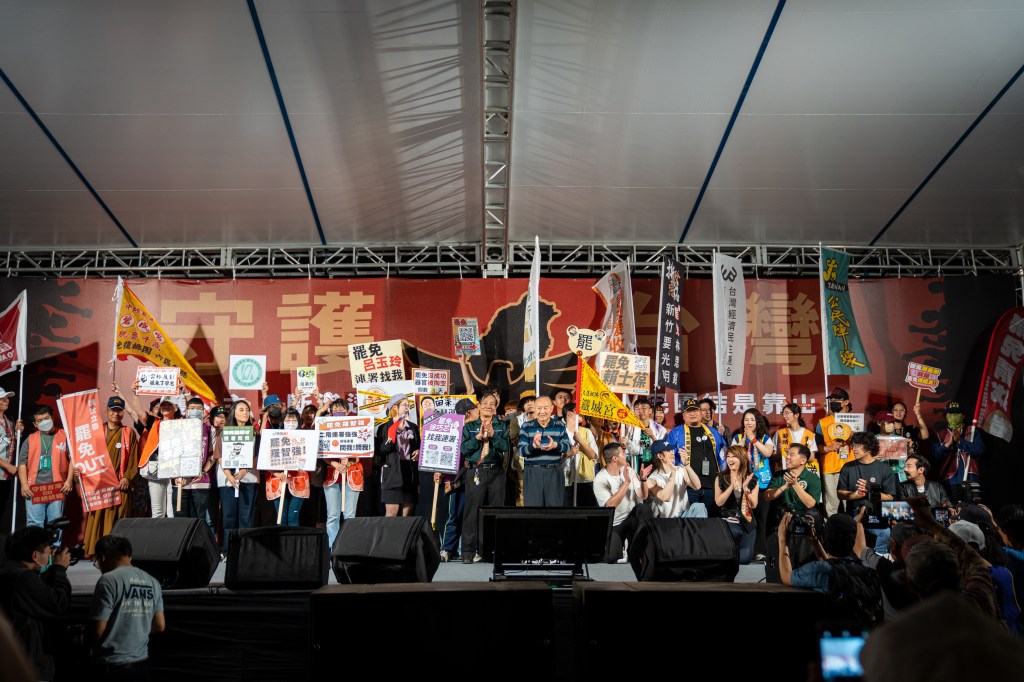
Posted in Uncategorized | Leave a comment

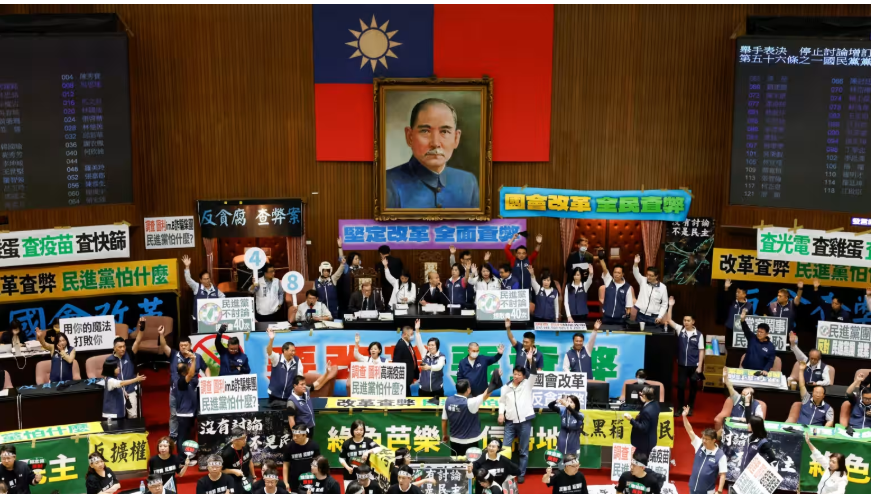
THE PURGE: Taiwan’s Recall Election Year

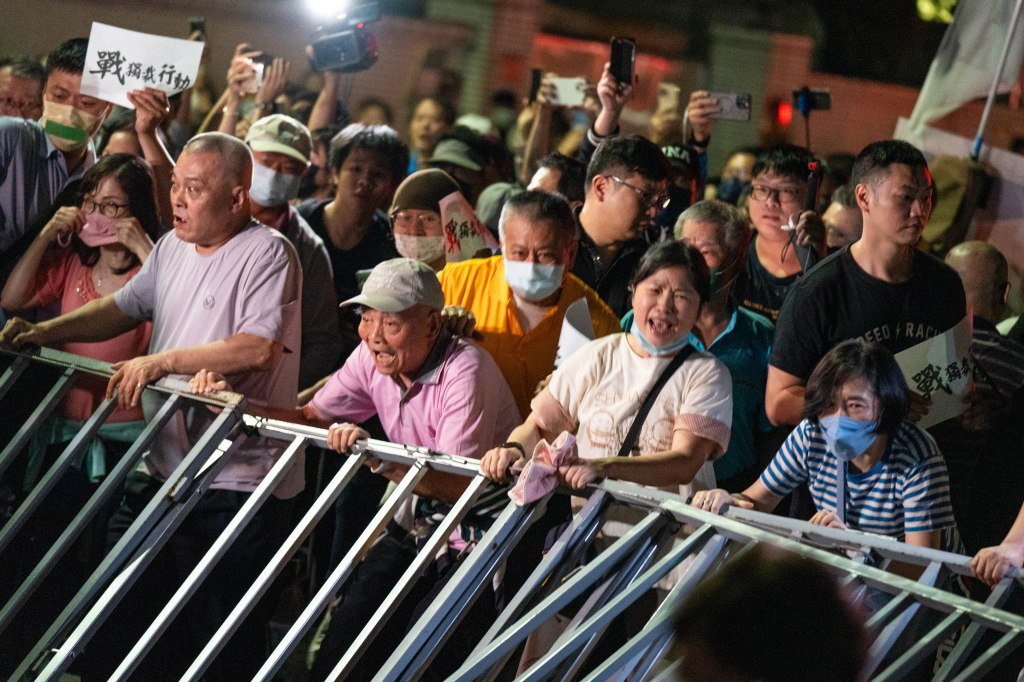
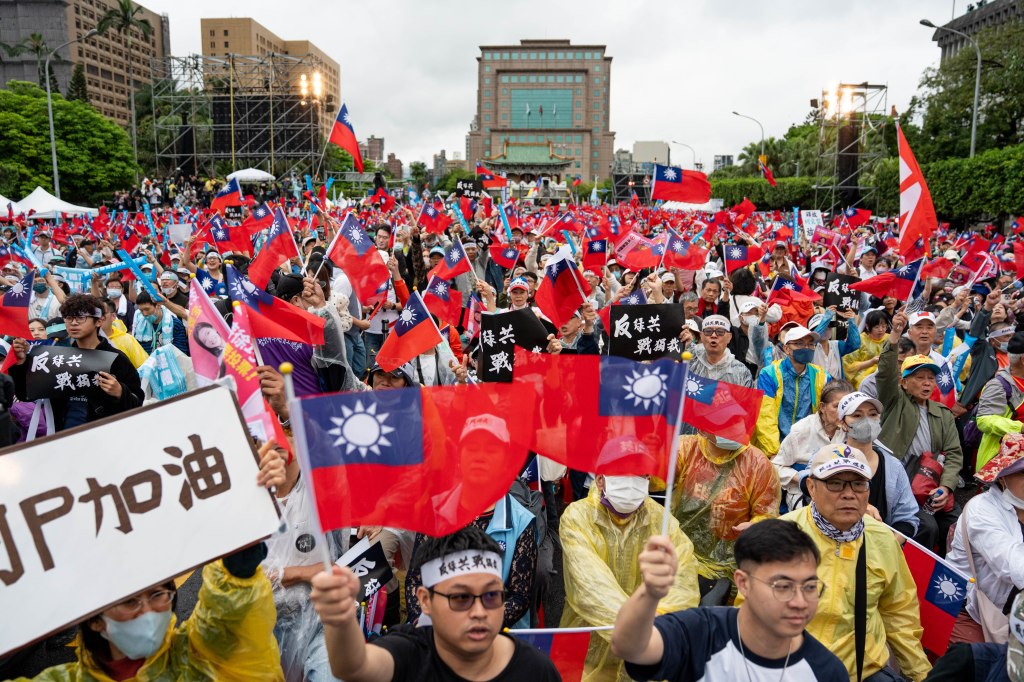
PRO-KMT, ANTI-RECALL PROTESTERS NEAR THE PRESIDENTIAL OFFICE By KOKUYO CC BY-SA 4.0

Taiwan’s movement to recall KMT legislators en masse is unprecedented. What are the implications for national security if it fails?

After making it through the first two stages of the recall procedure, 24 recall elections for Kuomintang (KMT) representatives in the Legislative Yuan (LY)—Taiwan’s legislature—will take place on Saturday, July 26.

This scale of recall for elected officials is unprecedented not only in Taiwan, but worldwide

Another 7 recall votes are scheduled for August (and there may be others later on) but the July 26 votes are seen as the most significant.

According to the pro-Taiwan-autonomy Democratic Progressive Party (DPP) and their allies, at stake is more than simply how Taiwan is run, but rather how the beleaguered island deals with the increasing threat from the Chinese Communist Party (CCP) bent on annexing what it regards as a rogue province of China.

The DPP is giving major support to the recall, which is being conducted by several civil society organizations.

Currently, the KMT have 52 seats in the LY, the DPP 51, and the Taiwan People’s Party (TPP)—which has been working in coalition with the KMT—another 8. Plus, there are 2 pro-KMT independents. Thus, the KMT/TPP coalition has 62 of the 113 total seats, a comfortable majority.

If half of the 24 recalls are successful, the KMT would lose 12 and the total number of effective LY seats would go down by those 12, giving the DPP 51 out of 101 seats—but only temporarily. In districts where the recall effort succeeds, there must be a byelection for a new legislator within three months.

These could go either way. But if the DPP can flip six seats, they gain full control of the Legislative Yuan.

PRO-RECALL, ANTI-KMT EVENT By KOKUYO CC BY-SA 4.0

How did we get here? This extreme level of recall was sparked by equally extreme actions by the KMT and their allies in the LY.

It all started after the January 13, 2024 elections, when Lai Ching-te from the DPP was elected president.

That same election saw the KMT—together with their allies-for-now the Taiwan People’s Party (TPP)—gain a majority in Taiwan’s Legislative Yuan (LY) for the first time since 2016.

This new KMT/TPP bloc came roaring out of the gates with an aggressive new bill to give the LY the right to summon individuals for hearings—including members of the military with sensitive information—with stiff penalties for non-compliance.

When Taiwan’s Constitutional Court issued an injunction against parts of the bill, the KMT/TPP coalition amended the Constitutional Court Procedure Act, raising the quorum to 10 judges (there are currently only 8) and then refused to approve the appointment of any new ones. This paralyzed the court, making it powerless to block any future KMT/TPP bills.

The alliance then went on to pass another bill redistributing some tax revenue from the central government to local governments, most of which are KMT controlled. They also clipped the proposed central government budget by 6.6%, and temporarily froze parts of military spending.

BLUEBIRD PROTESTS OUTSIDE LEGISLATIVE YUAN By 總統府 CC BY 2.0

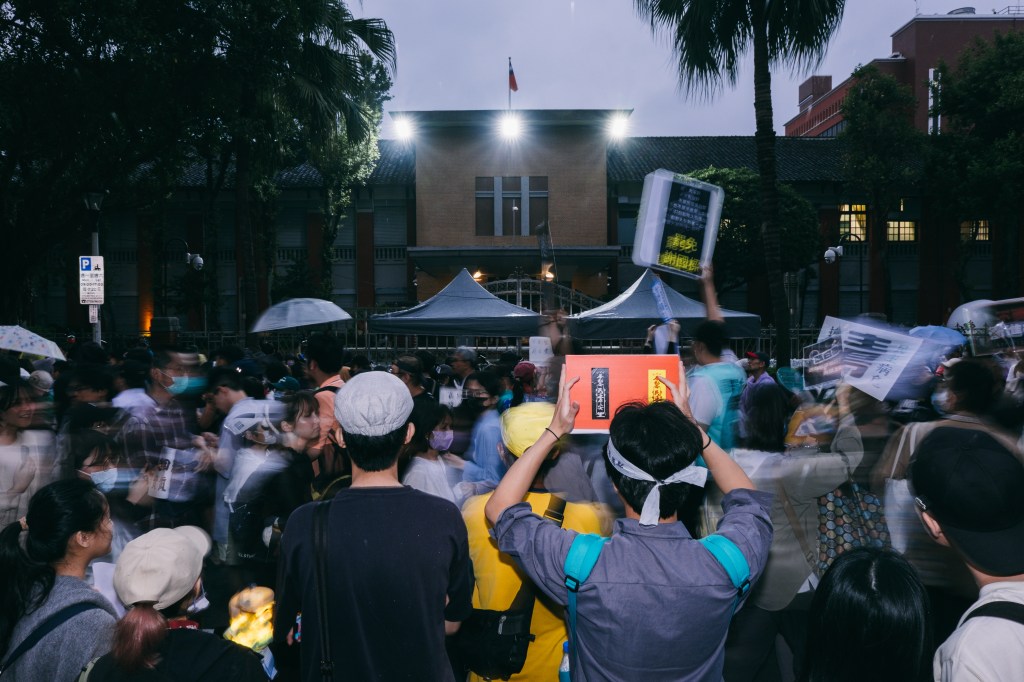
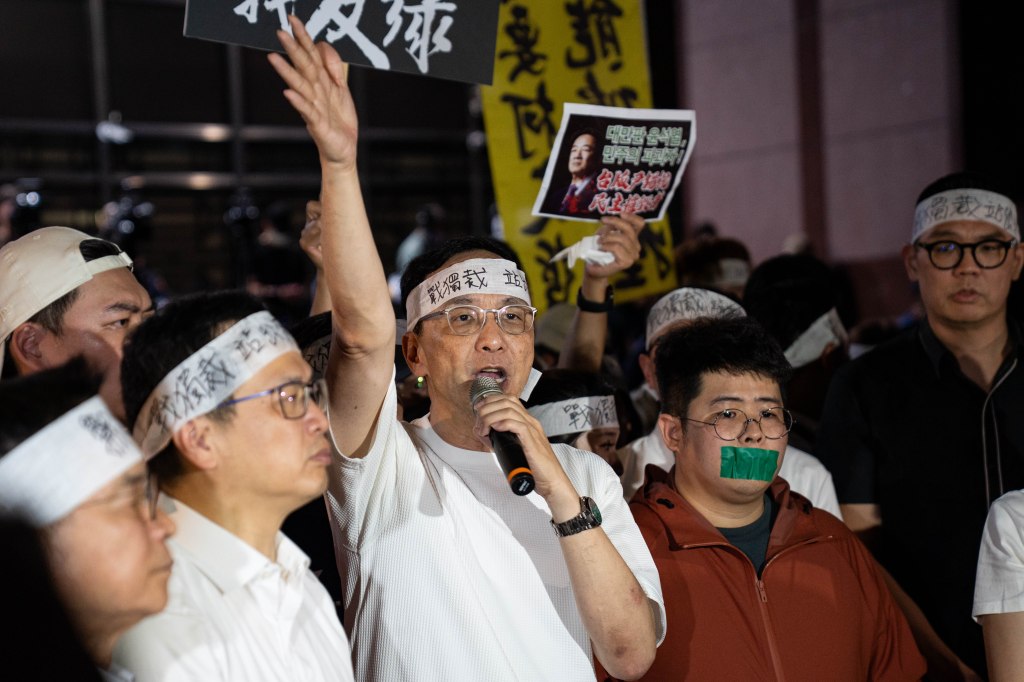
These moves sparked outrage among DPP allies, who called them an unconstitutional power-grab that would aid Beijing. Mass protests erupted outside the LY—the so-called “Bluebird Movement”—in May, 2024, which created momentum that led to the mass electoral recall campaigns, also known as Great Recall Wave, which began in early 2025.

In response, the KMT tried their own recall efforts on 15 DPP legislators, with no results to date other than getting over 100 of their recall workers charged for forgery and related crimes.

KMT CHAIR ERIC CHU WHIPS UP SUPPORT AT A RALLY By KOKUYO CC BY-SA 4.0

One pro-KMT activist summoned for questioning by the court appeared wearing a Nazi armband, carrying a copy of Mein Kampf, and performed Nazi salutes in front of reporters, implying that Lai was an authoritarian like Hitler for repressing his opposition.  

His satirical theatrics didn’t go over well. But the KMT side may have the last laugh if recall efforts fail, or if the subsequent byelections don’t grant the DPP a majority.  

It is a complicated situation, but one key issue stands out: How would an emboldened and resentful KMT impact President Lai’s national security agenda intended to counter the growing threat from China? Would they serve as a Trojan horse for CCP infiltration in Taiwan, as the DPP and its allies have alleged? At first glance, it seems at least plausible.

Since former Speaker of the House of Representatives Nancy Pelosi’s visit in August 2022, there have been regular military rehearsals for a Taiwan blockade or invasion by the rapidly-modernizing People’s Liberation Army (PLA), as well as daily grey-zone harassment by air force jets and navy ships maneuvering close to Taiwan.

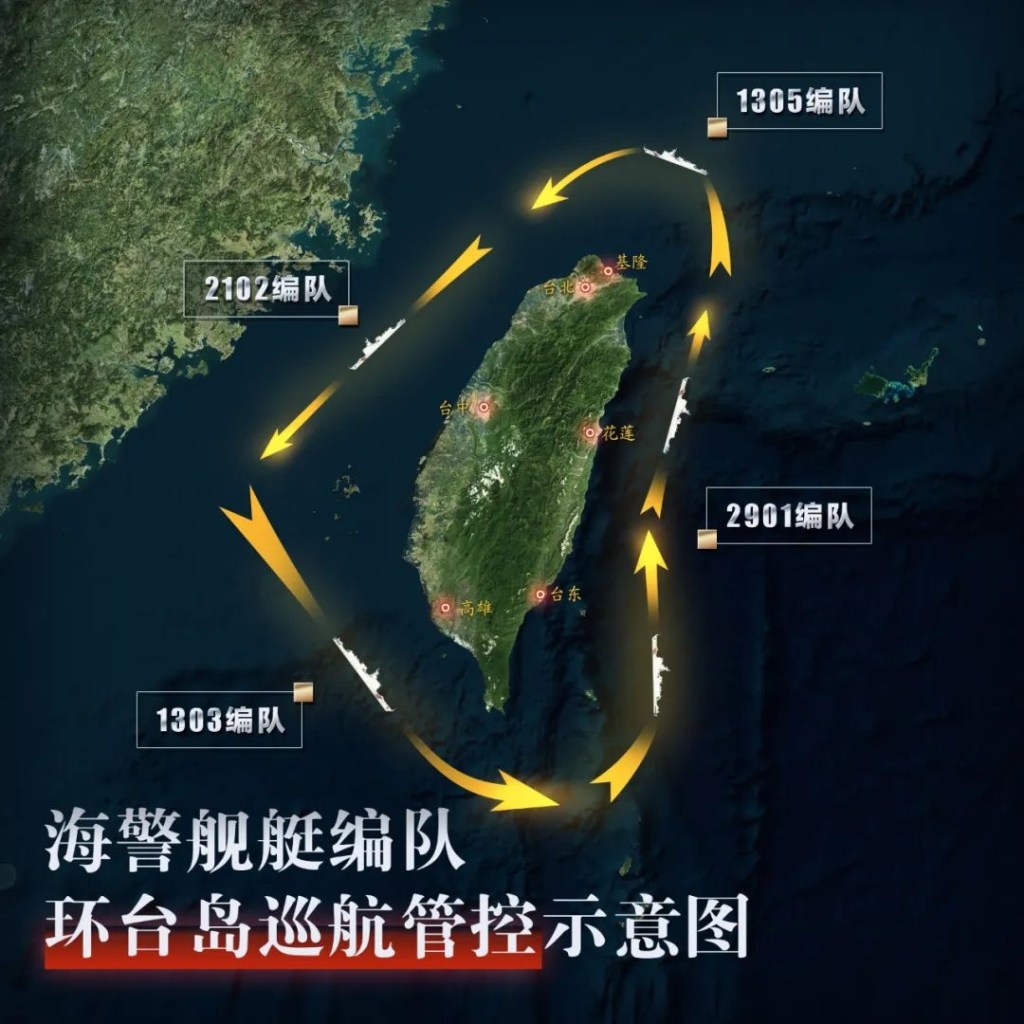
CHINA COAST GUARD’S FIRST ENCIRCLEMENT OF TAIWAN 2024

There have also been incessant cyber-attacks, espionage, cognitive warfare, lawfare, and influence operations by the CCP.

All of this has ramped up significantly since Lai took office.

In 2024, 64 people in Taiwan were charged with espionage-related offences. This was more than in the previous two years combined. About 60% of those charged were retired or active-duty military personnel.

Three soldiers from Lai’s own security detail were sentenced in March 26, 2025 for leaking confidential data to Chinese intelligence.

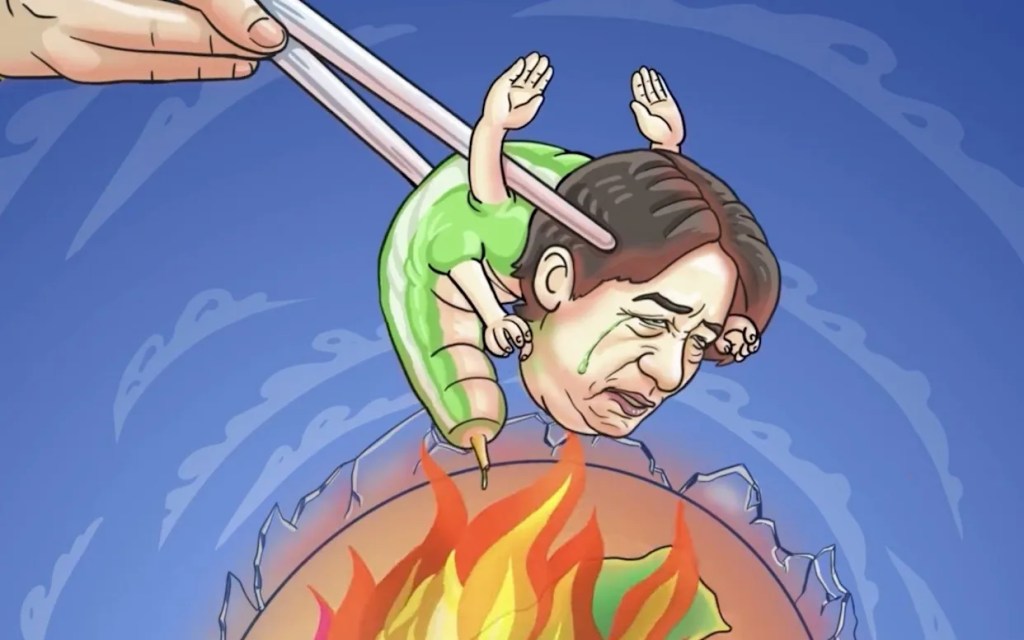
PLA PROPAGANDA VIDEO DEPICTING LAI CHING-TE BEING ROASTED AS A PARASITE

In response to this, on March 13, 2025, Lai stated that China qualified as a “hostile foreign force” under the Anti-Infiltration Act of 2020, and announced his Seventeen National Security Measures. One of these was the restoration of military tribunals for active-duty personnel involved in espionage against Taiwan.

However, despite this clear pattern of Chinese intelligence penetration, KMT Chairman Eric Chu denounced the move, accusing Lai of “stigmatizing the military” and unfairly portraying the armed forces as being infiltrated by China.

Chu also claimed the Democratic Progressive Party’s past support for the abolition of military courts in 2013 had “weakened the armed forces and allowed communist infiltration.” This is a bit bizarre, since the abolition occurred in August 2013 under KMT President Ma Ying-jeou, and when the KMT had an absolute majority in the LY.

Chu has consistently painted Lai as an autocrat intent on eliminating all opposition to his power.

Rather than accept that mistakes had been made in the KMT’s efforts to recall DPP legislators, Chu said: “What Lai Ching-te has been doing to the opposition is exactly what Hitler did” during his dictatorship, accusing Lai of using judicial investigations to “eliminate” the opposition and establish a dictatorship.

This over-the-top rhetoric even sparked sharp rebukes from the German and Israeli government representatives in Taiwan.

KMT SUPPORTERS PROTEST RECALL OUTSIDE PROSECUTOR’S OFFICE By KOKUYO -CC BY-SA 4.0

What specific future actions related to cross-Strait security might the KMT/TPP coalition take if they retain their control of the LY?

The following is just conjecture, but it based on the KMT’s pattern of behavior in the LY since the last election.

One possibility is a modification of the Cross-Strait Act (1992. Last amended 2019) such as redefining the Taiwan Strait as “Internal Waters” as recently proposed by KMT Legislator Chen Yeong-kang and 18 coalition lawmakers.

This could be framed as intended to avoid conflict in the tense waters around Kinmen and Lienchiang (Matsu) island groups. But critics assert that it risks legitimizing Beijing’s claim that cross-strait issues are “domestic” rather than international.

The Act could also be modified to loosen restrictions on cross-Strait contact, or to remove or weaken reporting requirements for contact with PRC entities. This could be sold as promoting positive exchanges between China and Taiwan, but could also allow for greater penetration by the CCP’s United Front Work Department.

The LY coalition might even seek expanded legislative oversight of cross-Strait policy, requiring the Executive Yuan to seek Legislative Yuan approval for defense and China-related strategies. Framed as civilian oversight, this could also hamper executive flexibility and empower pro-China legislators.

Of course, just because these ideas have been suggested by some KMT members does not mean they will gain the approval of the caucus leadership.

But regardless of how the recall pans out, the KMT/TPP will probably continue with negative messaging to undermine Lai’s popular support at home, which could complicate his efforts to signal to the world—especially the Trump administration—that Taiwan is stepping up for its own defense.

This raises the question even among neutral observers: Whose side is the KMT on? Taiwan’s or China’s?  The most likely answer is “China’s”—the Republic of China, that is, and not, they say, the People’s Republic of China or the Communist Party of China . How realistic or sustainable that is, given the PRC’s ambitions and growing strength, remains an open question.

Stay tuned for Part 2: The KMT’s enigmatic “China Dream


Posted in Uncategorized | Leave a comment

My Taiwanese Feet Turn Five

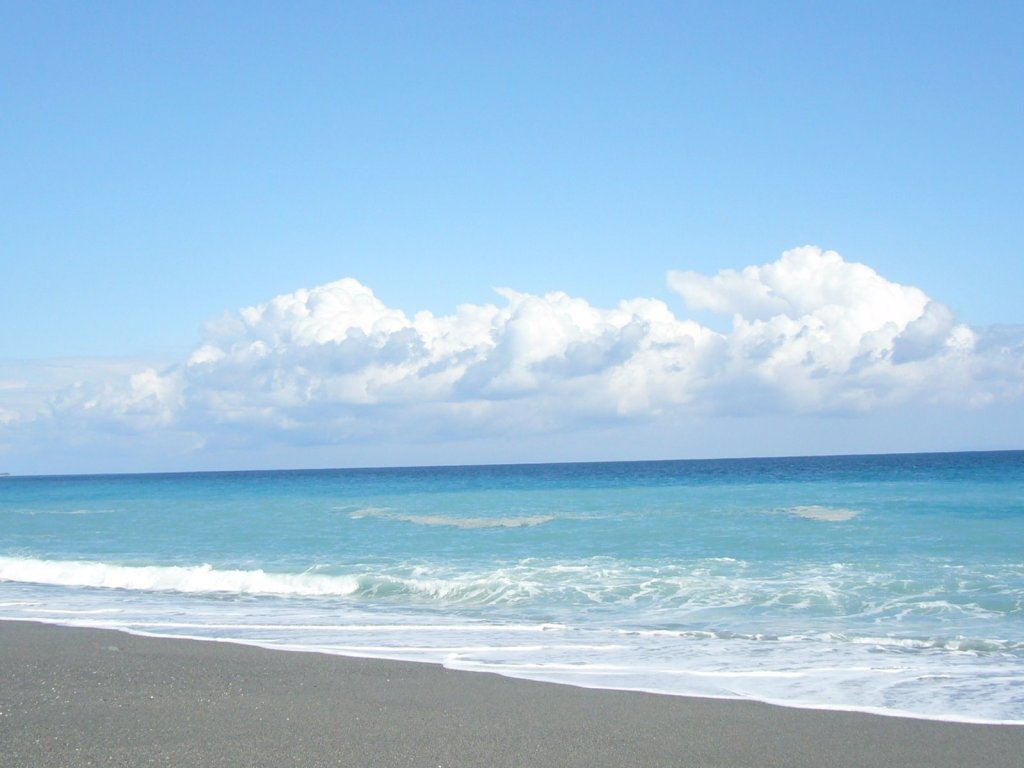
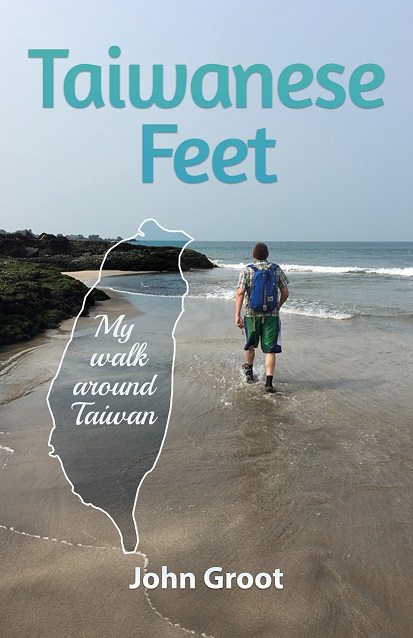
This May marks the 5th anniversary of the publication of my book, Taiwanese Feet: My Walk Around Taiwan, a travelogue about my multi-stage walking journey around the entire coastline of Taiwan. And like myself during that long journey, time just keeps moving along. In fact, my 60th birthday is coming up this June. That is a sobering milestone. But my grief over lost youth is partially soothed by happy memories. Of course, quite a few parts of my walk were difficult or tedious. But there were many more wild and free moments, especially along the east coast. There, the ocean was my true-blue friend, with its fresh winds, the roar and hiss of waves breaking on silver-pebble beaches, and clouds flirting with an endless horizon. And always that next piece of coastline to follow, my route ahead tracing the edge of the coastal mountains, stretching into the hazy distance. Those were good times.

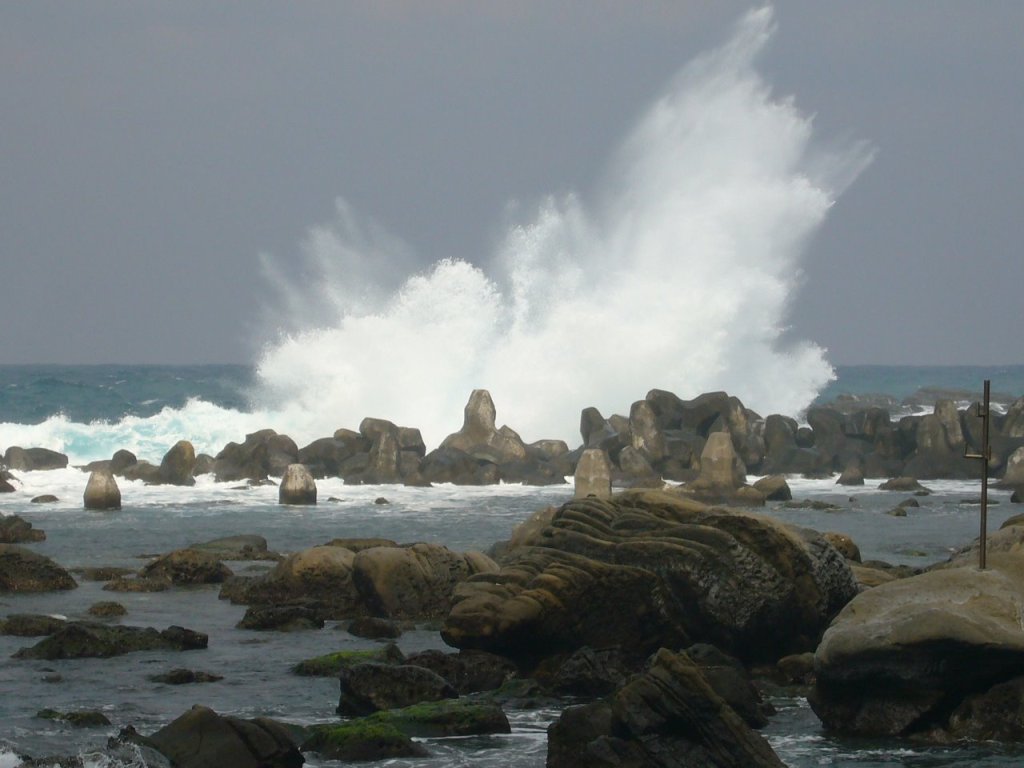
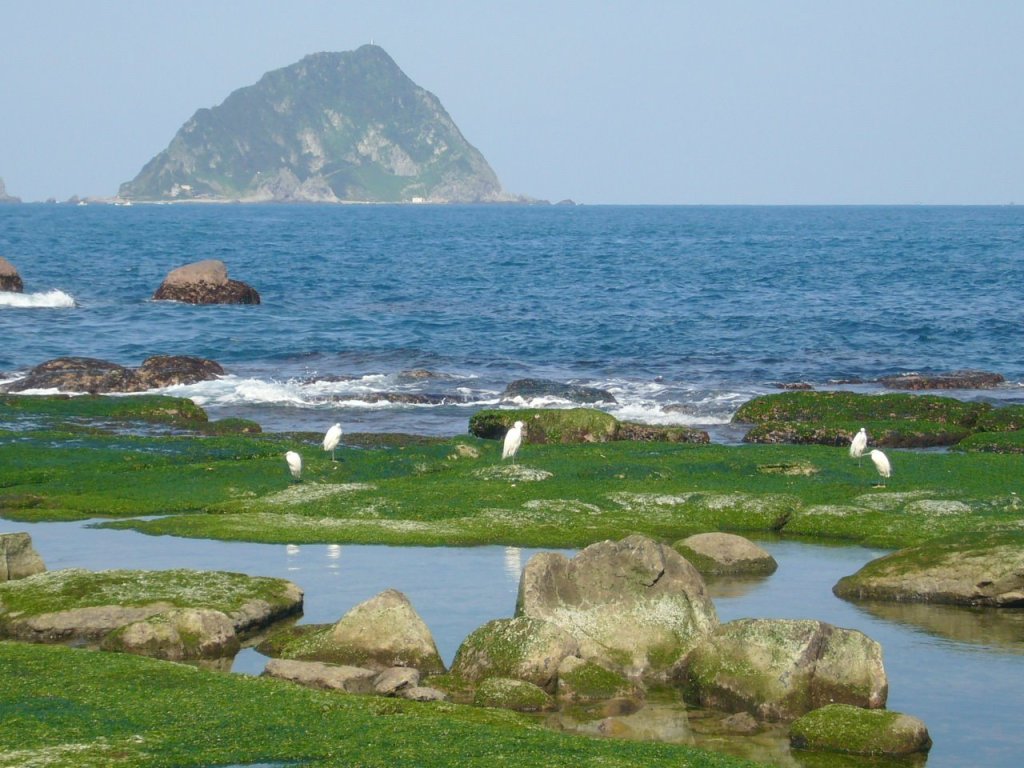
Here are a few pictures from the walk. There is more article text below them.

HEAVY SWELL AT JINSHAN
JILONG ISLET FROM HEPING ISLAND
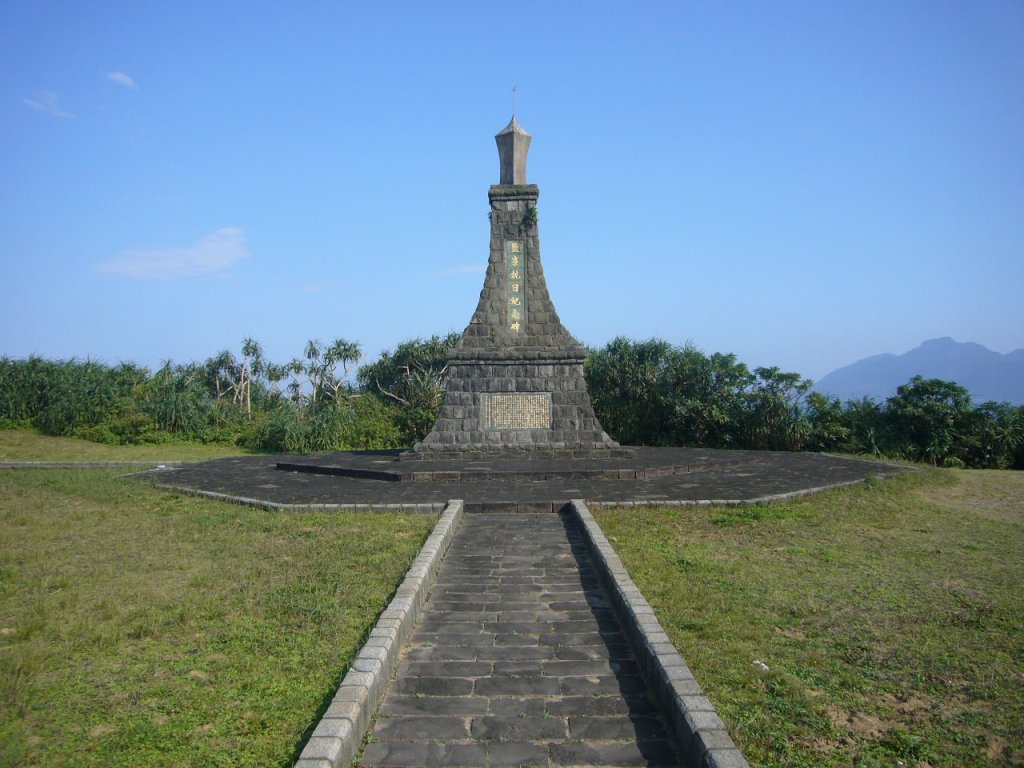
YANLIAO (ANTI-JAPANESE) RESISTANCE MONUMENT, GONGLIAO
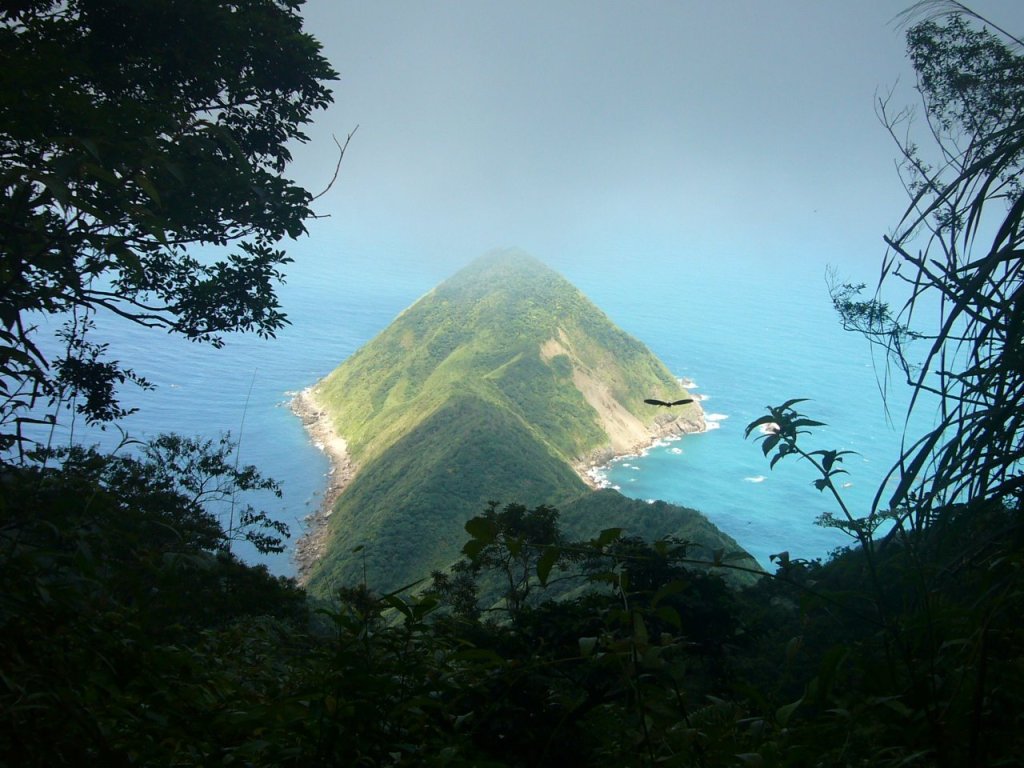
WUSHIBI PENINSULA FROM A FORBIDDEN ROAD
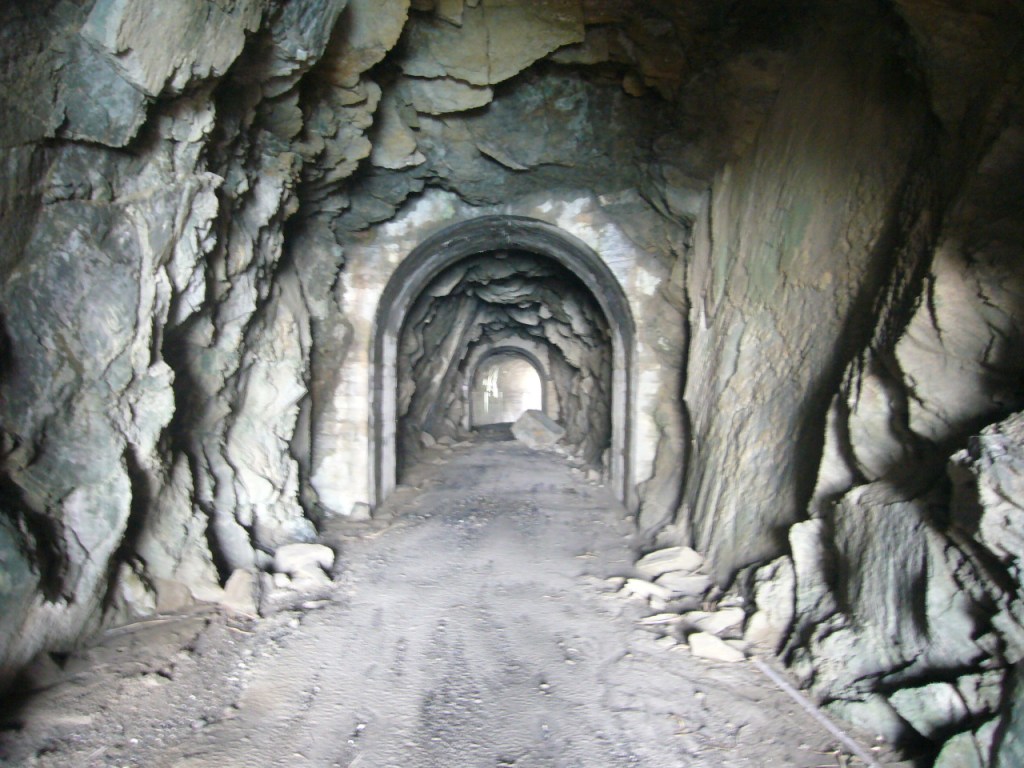
ABANONDED SECTION OF OLD JAPANESE SU-HUA HIGHWAY
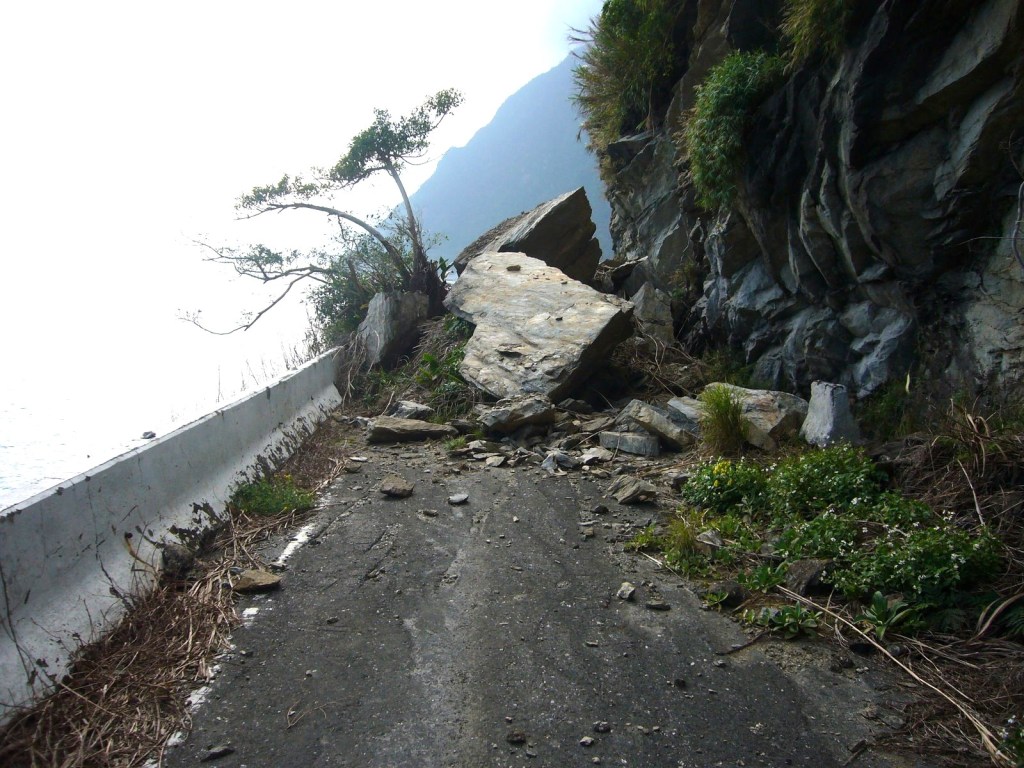
ABANDONED FOR A REASON
W-O BUDMO, SHIPWRECKED IN HOUWAN, PINGTUNG

But rather than live in the past, I am already halfway through my next adventure: exploring every street and neighborhood in the Taipei Basin on foot or by bicycle. I have traded the bright beaches for grey streets and concrete buildings—a poor exchange, some might say.  Although Taipei can be a bit crowded, grimy, and shabby—and frankly, nowhere near as beautiful as the coast—my journeys are anything but boring.

The older, famous parts of town are richly historical. Areas like Dadaocheng and Wanhua attract many tourists, due largely to their restored buildings from the Qing Dynasty and the Japanese colonial era, the latter notable for their stylized Baroque facades. Also scattered around the city are also roughly two dozen “military dependents’ villages,” clusters of tiny rustic homes, often with narrow alleys meandering between them. These are left-overs from the late 1940s, when over a million KMT “mainlanders” fled to Taiwan due to Mao’s victory in the Chinese Civil War. The old Taiwan is plainly visible in these places.

CURTIS SMITH (史康迪) IN FRONT OF 44 SOUTH MILITARY VILLAGE

Even the average Taipei neighborhood can have its own charms. Hidden behind the major commercial avenues, there are networks of narrow lanes, with a mix of townhouses and small apartment buildings from the 1970s, ‘80s, and ‘90s. There are also many parks with big shaggy trees, their lower trunks often planted with purple orchids. Occasionally, I find tall blocks of social housing, built to house former residents of military dependents villages, most of which are now gone. Throughout Taipei’s humbler neighborhoods, I encounter anomalies: an abandoned house overgrown with plants; streets converging at odd angles next to a fancy, old building; or a long, thin park where a railway line once ran. Taipei’s history is visible everywhere, if you know how to look for it.

“HAUNTED TOWERS” XINING PUBLIC HOUSING, NOW CONDEMNED
CONTRAST IN TAMSUI

Every kilometer or so, wider market streets cut through, with a diversity of small, family-owned shops. Deliveries congest the sidewalks, grannies banter as they choose vegetables, and street-side stalls are abuzz with workers jammed in next to each other to eat lunch.

The city’s edge districts—such as Neihu, Beitou, and Muzha—are enjoyable to explore as the urban zone transitions to hillside or farmland, with green slopes of tall bamboo, verdant rice paddies, or fresh rivers rushing down from the forests above.

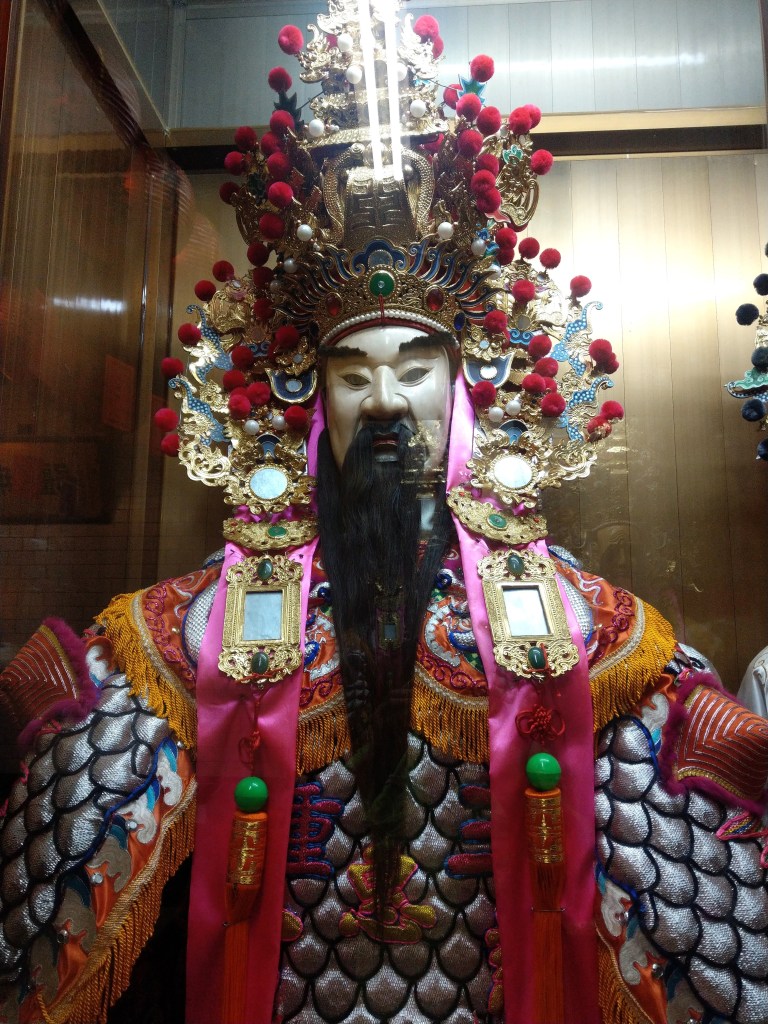
Almost anywhere in Taipei, the regular pace of life can be interrupted by a striking temple procession with costumed figures, god-icons in ornate palanquins, and deafening explosions of firecrackers.

TEMPLE DEITY IN SANCHONG

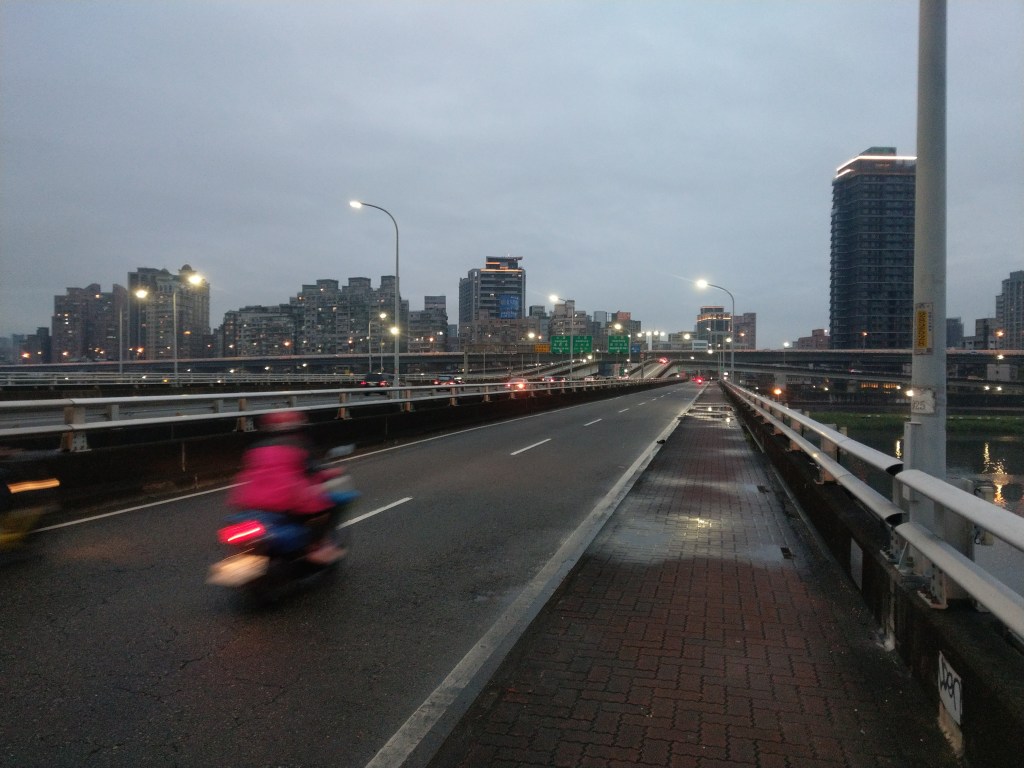
TAIPEI BRIDGE AT SUNSET

This is my Taipei: a quirky blend of tradition, local commerce, and fading reminders of its history—all set against a backdrop of intense modernization. With nature never too far away, and the calm kindness of most Taiwanese people, my journeys all around the city are enjoyable, as well as excellent mental stimulation for further research.

I am seeing the city I have lived in for over 20 years with new eyes. Yet on this 5th anniversary of Taiwanese Feet, I am full of memories of the freedom I felt as a younger man walking along the ocean’s edge.

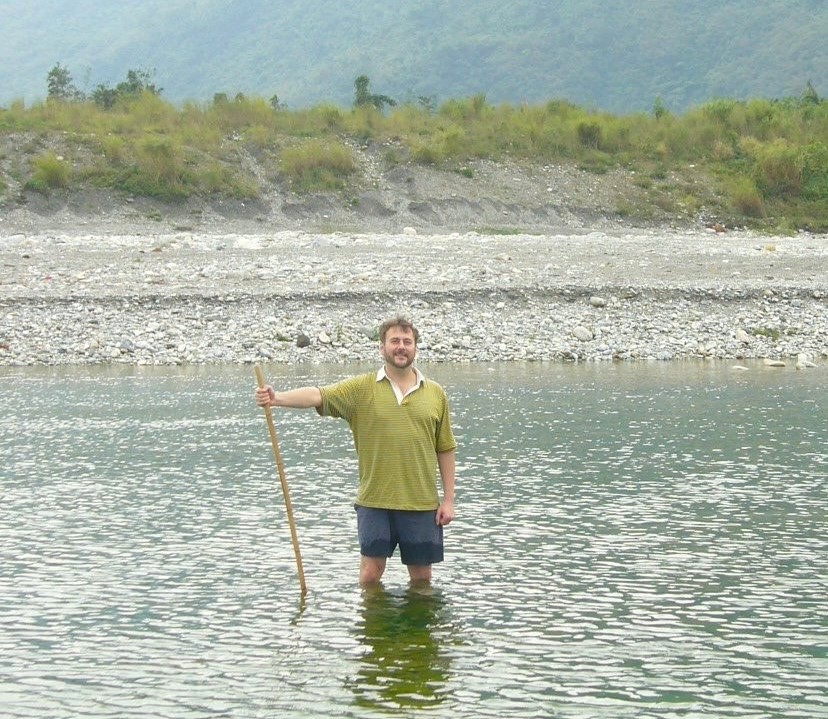
CROSSING A RIVER ON THE WALK: HUALIEN, MARCH 1, 2008

If you are interested in Taiwanese Feet: My Walk Around Taiwan, or have any questions about my other work, don’t hesitate to send me a message through this site, email me at Taiwanese DOT feet AT Gmail DOT com.

Or contact me on Facebook:

https://www.facebook.com/Taiwanese.Feet

Thanks to John Ross of Plum Rain Press for having me on his podcast for Bookish Asia. Links below for the episode on:

Spotify https://open.spotify.com/episode/2PmxDJ90I75jj3owx6LlYF?si=a6e092cf3e454843&nd=1&dlsi=e5236b3d711345f8

Apple Podcasts https://podcasts.apple.com/tw/podcast/e-13-taiwanese-feet-my-walk-around-taiwan-by-john-groot/id1756322103?i=1000709496277


Posted in Uncategorized | Tagged , , , | Leave a comment

UPDATE: RESILIENCE ROADMAP (V2.0)

Version 2.0 of Resilience Roadmap: An Emergency Preparedness Guide to Expats in Taiwan is now ready for sharing.

Updates have been made to the following areas: The section on fires now covers dealing with toxic smoke. Material about evacuating buildings in an emergency now contains more information on using self-rescue devices. The pages covering radio communications and water purification have been improved, and the analysis of factors related to war in the Taiwan Strait has been updated with more recent concepts and information. Additionally, there have been many other small additions, corrections, and edits.

Unfortunately, this guide is as relevant today as it was when Version 1.0 was released in December 23. Since then, much has happened that is relevant to our preparedness for disasters and emergencies here in Taiwan. Below is a brief summary.

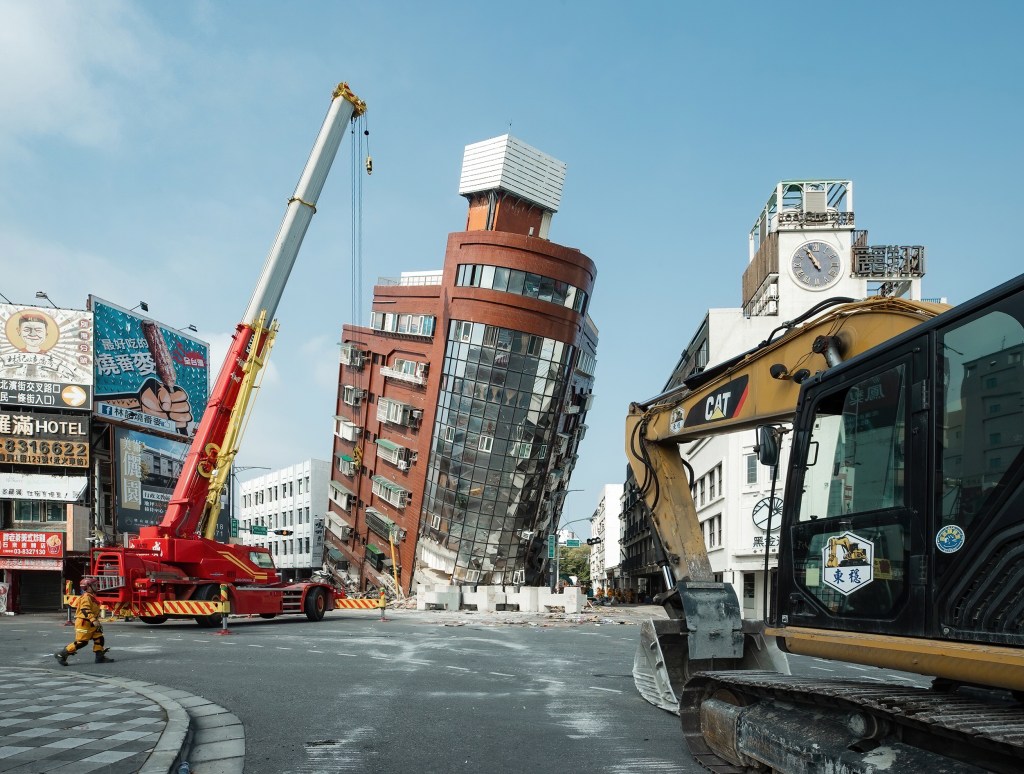
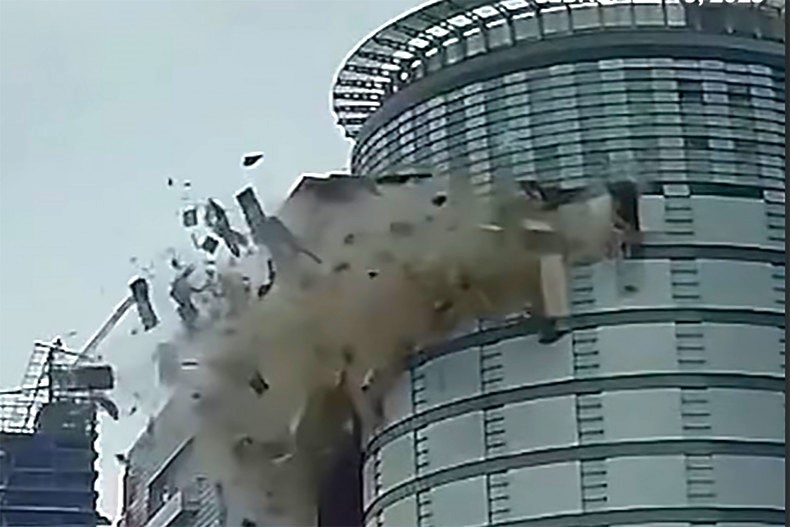
Earthquakes: In the 7.4 magnitude, April 3, 2024 Hualien Earthquake, the strongest since the 1999 Jiji Earthquake, at least 19 people were killed, and over 1,100 injured. Video footage of thousands of small rocks—and some giant boulders—raining down on roads with cars on them was one of the indelible images from that event.

URANUS BUILDING IN HUALIEN AFTER THE EARTHQUAKE
Photo by Shufu Liu , Office of the President

Fires: There were two major fire-related events in Taiwan in the 15 months between V1.0 and V2.0, both in Taichung. A major fire on December 19, 2024 at a PX Mart processing center under construction killed 9 and injured 5. There was also a dramatic downtown, day-time gas explosion on February 13, 2025, at a Shin Kong Mitsukoshi department store under renovation, which killed 5 and injured 4.

SHIN KONG MITSUKOSHI DEPARTMENT STORE BLAST

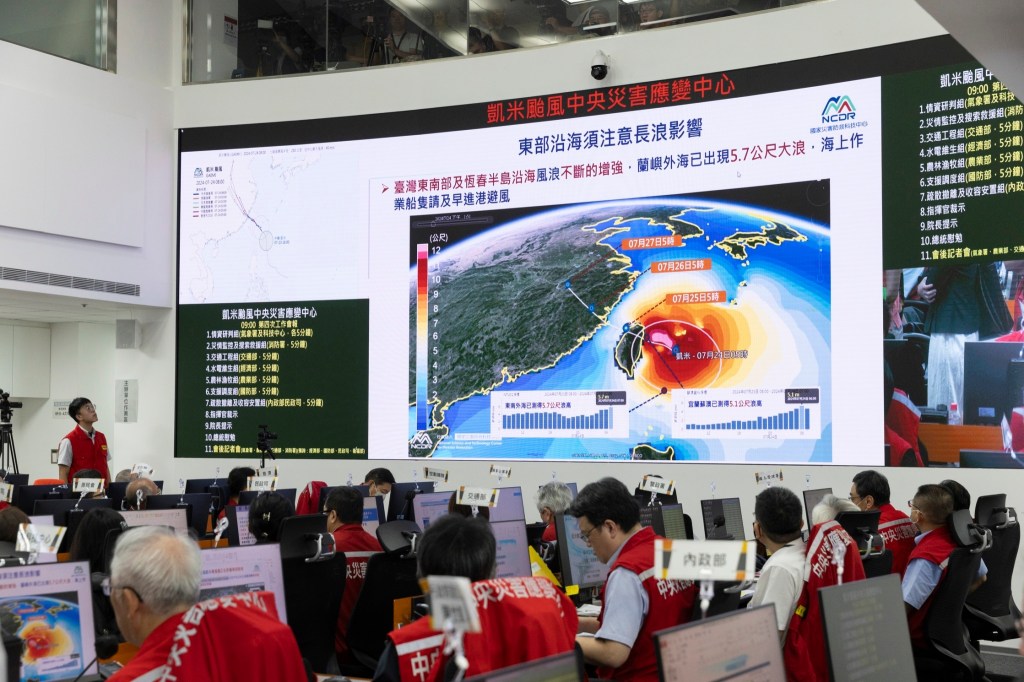
Typhoons: Taiwan saw three typhoon landfalls in 2024, Gaemi, Krathon, Kong-rey. That was the most direct hits in a year since 2008, with two in October being a historical first. There was a total of 14 deaths and 835 injuries.

TAIWAN’S CENTRAL DISASTER RESPONSE CENTER BEFORE TYPHOON GAEMI HIT
By 總統府

Disaster and emergencies are still fairly rare but they do happen and we need to be prepared. It is in that spirit that we share this updated version of Resilience Roadmap.

(More about the threat of war below the downloadable file and e-book links.)

Below is the free PDF e-book for download.

For those who like e-books, you can download this work in standard EPUB format for free from Flickerwell, an independent e-book publisher. Other EPUB versions (Amazon Kindle, Apple Books, Google Play Books, and Rakuten Kobo) are also linked from there.

LINK: https://flickerwell.com/ebooks/p/resilience-roadmap

THE THREAT OF WAR

In terms of geopolitical security for Taiwan, 2024 was an eventful year as well. 

On May 20, 2024, William Lai Ching-te from the Democratic Progressive Party (DPP) was inaugurated as President of the Republic of China, Taiwan. Lai is someone that the Chinese Communist Party brands as a separatist, so it was no surprise that they responded with large-scale military exercises intimidatingly close to Taiwan, as well as an increase in “grey zone” warfare tactics.

The exercises were named Joint Sword-2024A, on May 23-24—just after Lai’s inauguration—and Joint Sword-2024B, October 14—just after his Double 10 Day (Taiwan’s national day) speech. These were “multi-domain coordination and joint strike capability exercises” involving the People’s Liberation Army’s (PLA) ground forces, air force (PLAAF), navy (PLAN), and rocket force (PLARF), and for the first time in such exercises, the China Coast Guard (CCG). A further set of naval and air force exercises were held from December 9-12, 2024. Although these were unnamed, the fact that they were focused on attacking or denying entry to foreign shipping made their saber-rattling message very clear.

(As I wrote these words on February 26, there were reports of a set of sudden, unannounced live-fire exercises some 40 nautical miles southwest of Kaohsiung.)

Initially these new-form, upscaled exercises were interpreted as a sign of the CCP’s anger at Taiwan’s supposed independentist provocations, such as when Speaker of the U.S. House of Representatives Nancy Pelosi visited Taiwan in August, 2022. However, it now seems more likely that the CCP/PLA were happy to have an excuse to practice blockading the island, perhaps as a prelude to a possible invasion. These events are also a way to normalize military activity around Taiwan, so that if and when the they do decide to strike, they can pivot suddenly from exercise to attack, in the hope of catching local defenders and foreign allies unawares.

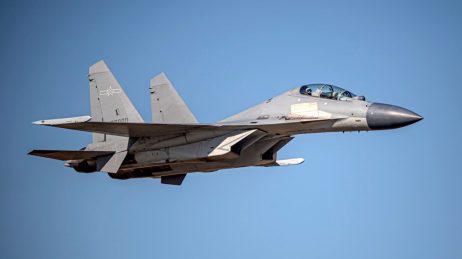
PLAAF J-16 FIGHTER JET IN TAIWAN’S ADIZ

While the exercises are flare ups in tension, they are set against the chronic harassment of “grey zone” warfare—hostile actions that fall short of open aggression—in the form of aerial and naval incursions, designed to wear down Taiwan’s military and gain intelligence about its response capabilities. They have been increasing in frequency, scale, and complexity. In 2024, there were 3,069 military aircraft incursions across the median line of the Taiwan Strait —an increase from 1,703 in 2023.2023. In addition, there has been an increase in PLAN ships circling the island, aggressive posturing by CCG vessels, the suspected cutting of underwater internet cables to both the Matsu Islands and Penghu Islands in the Taiwan Strait, and other provocations.

On the political home front, Lai (and supporters of a free and democratic Taiwan) have other headaches as well: a coalition between the Kuomintang (KMT) and the Taiwan People’s Party (TPP), who won an effective majority in Taiwan’s Legislative Yuan in the January 2024 elections. As soon as the new legislative session began, they instantly embarked on an aggressive campaign of major bills that seem intent on disrupting the balance of power in their favor, weakening the executive branch. For example, they voted to change the allocation of tax revenue between the central and local governments from the longstanding 75-25% respective split back to the pre-1999 60-40%. This will make funding, and hence delivery, of central government services (including health care and defense) much harder. Surprisingly, they did this without adding any new responsibilities to the local governments, many of which are KMT-controlled. What’s more, the coalition also cut the central government’s proposed budget by 7%. The effect of both these financial changes comes at a time when boosting military spending could be essential to maintaining U.S. security support in the Trump era.

LAWMAKERS TAKE PART IN A SESSION OF THE LEGISLATURE ON MAY 28, 2024

The radical new bills have triggered a “recall war”, in which both parties, but mainly the DPP, are using grass-roots methods to try and get members of the opposing party recalled from the legislature.

Many DPP supporters believe that leading KMT and TPP members are cooperating with the CCP in a form of political warfare to sabotage Lai’s government and Taiwan’s national defense. However, even if one takes the view of this being simply politics as usual, there is no doubt that the divisive in-fighting undermines Taiwan’s social unity, not to mention its capacity to enhance defenses in the hope of dissuading Chinese military action. Whether these radical lawmakers are fellow-travelers or useful idiots for the CCP, the effect is largely the same: a weaker Taiwan and an emboldened CCP.  

In summary, Taiwan’s security as a free and democratic society faces multiple serious challenges. Of that, we should have no illusions.

————————————————————————————————————-

Posted in Uncategorized | Tagged , , , , , , , | Leave a comment

Legacies of the Pacific War: From Tamsui to Yasukuni

By John Groot

While there actually is no ancient Chinese curse that translates to “May you live in interesting times,” the idea that major historical events can mean chaos and grief to everyday folk is widely understood. One person who knows this well is Taiwanese-born doctor and amateur historian Hong-Ming (H.M.) Cheng. He and his family have had the rare position of not only being documenters and reporters of Taiwan’s history, but also participants in it, which gives the articles in H.M.’s (aka Eyedoc) Tamsui history blog “The Battle of Fisherman’s Wharf” a rare depth and insight. His ancestral lineage traces back to Koxinga’s half-brother, and members of his extended family have lived in or near Tamsui for hundreds of years. Some of them could have seen famous characters like Canadian missionary George Leslie Mackay or British tea merchant John Dodd on the street, or heard the cannon fire during the French barrage on Tamsui on October 2nd, 1884 with their own ears. Interesting times indeed! But this proximity to history also came at a great cost to the family, especially during World War II in the Pacific Theater – the Pacific War.

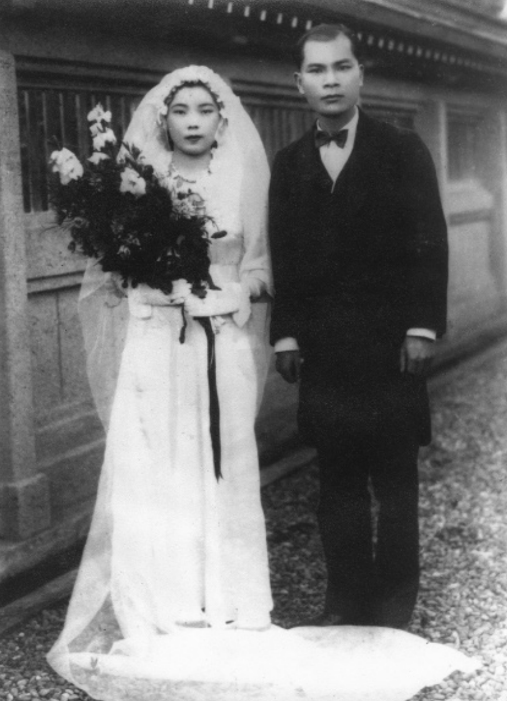
WEDDING PHOTO OF HONG-MING CHENG’S PARENTS, FEBRUARY 20, 1942,
TAMSUI SHRINE

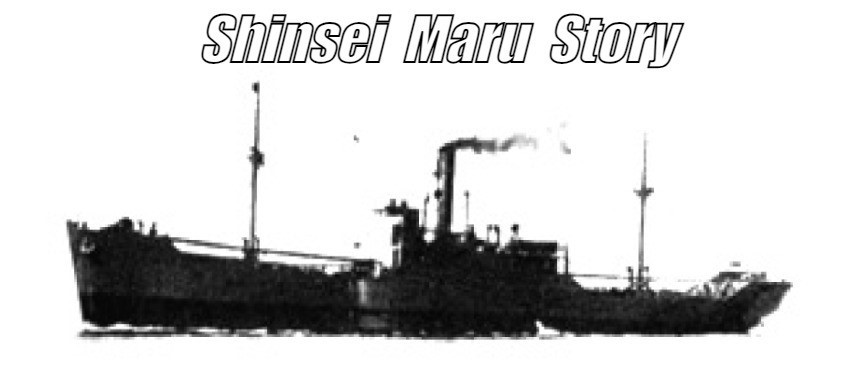
Many families experience tragedy during war, but a family of historians documents it. Shinsei Maru Story is a book by H.M. Cheng to honor his father Dr. Cheng Tze-Chang, who died when H.M. was still an infant, and his mother Mrs. Stella Yu-Yeh Wu Cheng, who bore a lifelong sorrow for the man she had loved and married in Japanese-occupied Taiwan. When she passed away in 2008, she left H.M. some hitherto unshared old photos and memoirs of their early marriage years in Tamsui amid the intensified Japanization of World War II.

H.M. returned to Taiwan from the United States in 2008 to dig deeper into his family history, a process he had started in the United States the year before. What he uncovered was that, as a physician (like H.M. himself) Cheng Tze-Chang had been conscripted to serve the medical needs of staff at a far-way outpost of Imperial Japan, the oil-fields of Balikpapan in Borneo. But he never got there: On January 12, 1945, his ship—the eponymous Shinsei Maru, one of many with the same name—was sunk by an American aerial attack off the coast of Indochina (Vietnam.)  Cheng Tze-Chang, along with hundreds of other medical and other personnel, was killed.

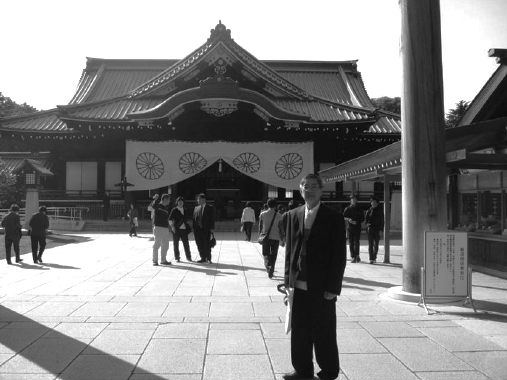
HONG-MING CHENG IN FRONT OF YASUKUNI SHRING IN TOKYO, 2008

H.M. also discovered that his father’s name was listed at the Yasukuni Shrine in Tokyo, along with millions of others who died in military service of the emperor. So, in 2008 and 2009, he visited the shrine to pay homage to his father, completing his journey of filial piety to both parents. Published in 2020, Shinsei Maru Story documents this entire journey in detail. It is based on primary historical sources and meticulous research. But there is also a deep line of sadness and loss that runs through it, very personal to the author and his family—one tiny particle of the great tragedy of the Pacific War.

It is also a fascinating window into the Japanese colonial era in Taiwan, seen through the eyes of H.M.’s mother and other family members who lived at that time. Thanks to H.M. Cheng for making the e-book freely shareable for the curious to enjoy learning from, in a spirit of respect for the serious family matters it discusses.

Two choices for free download:

1) A link: Free download of Shinsei Maru Story.

2) Direct download of the file. It appears blank because the

first page is blank, but the file is complete.

Additionally, as the whole context of the story is relevant to a larger discussion of Taiwan’s collective memory of being a colony of Imperial Japan, I have attempted a preliminary exploration of this topic, below.

Part 2

A Strange Affinity: Taiwanese Views about Colonial Japan

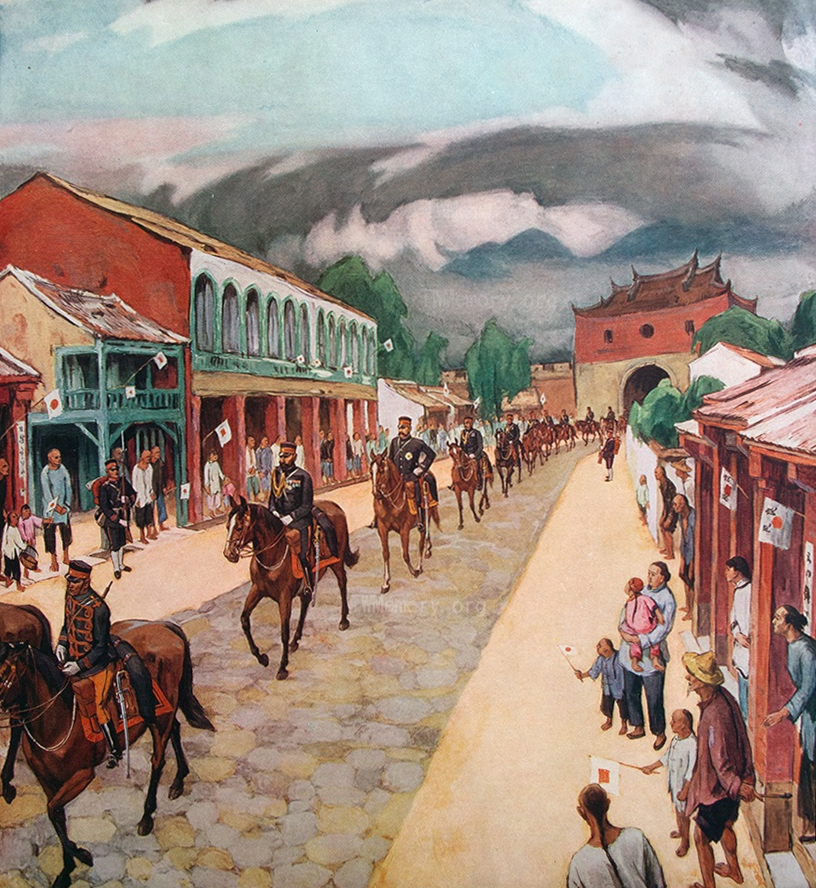
JAPANESE SOLDIERS ENTERING CITY OF TAIPEI IN 1895, By Ishikawa Toraji

For most Westerners, the dominant narrative about Japan in World War II goes something like this:

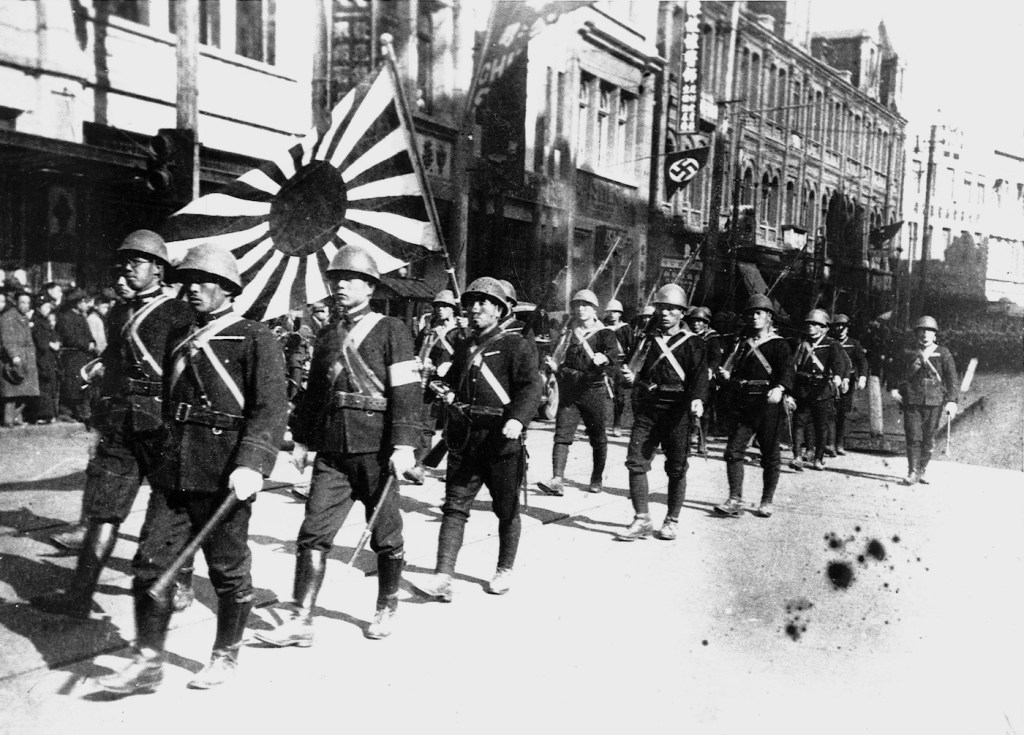
The Empire of Japan was a belligerent, militaristic state that expanded its territory through intimidation and conquest, taking over Taiwan in 1895, Korea in 1910, and Manchuria in 1931. It then committed the full-blown invasion of China in 1937—considered by many scholars as the beginning of World War II—grabbing considerable swathes of territory, including Beijing, Shanghai, and Nanjing. In 1940, the empire also took over French Indochina, with the approval of Vichy France.

IMPERIAL JAPANESE ARMY MARCHES, SWASTIKA FLAG IN BACKGROUND

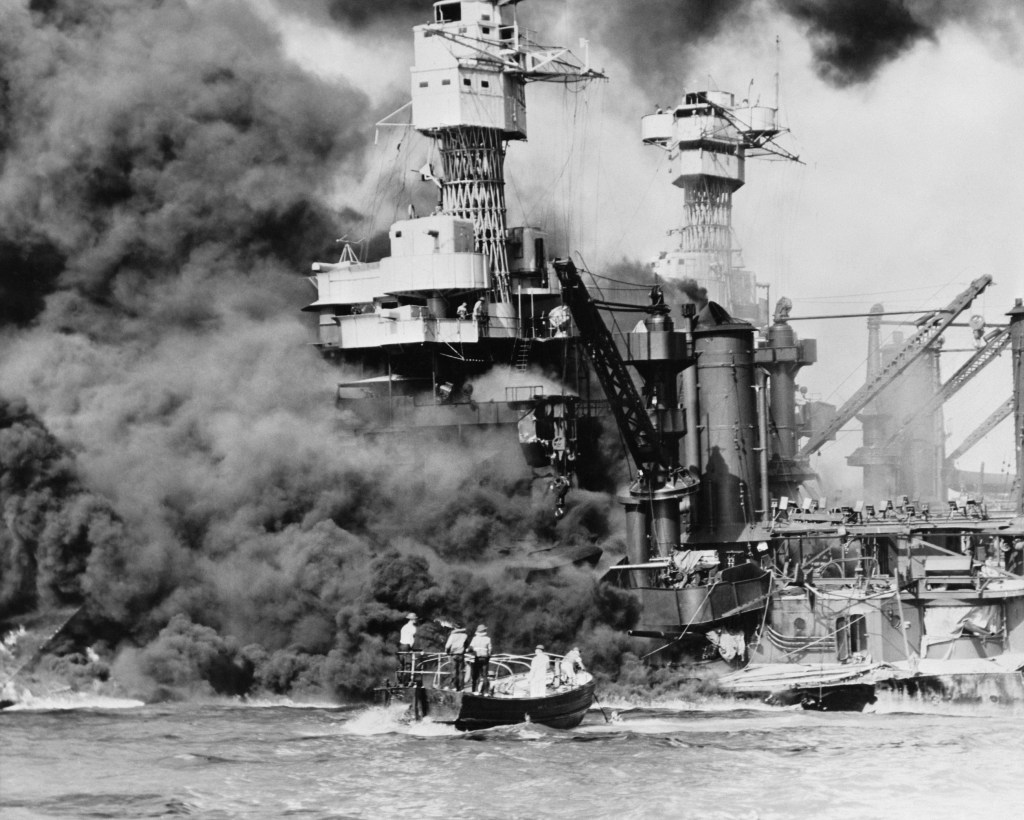
Of course, the big power play was on December 7th, 1941, with the surprise aerial attack on the U.S. naval base at Pearl Harbor, Hawaii. In the following hours, Japan also launched attacks on the U.S.-held Philippines, Guam and Wake Island, the Dutch Empire in the Dutch East Indies (present-day Indonesia,) Thailand, and on the British colonies of Borneo, Malaya (Malaysia) and Hong Kong. Over the following weeks and months, they kept on the offensive. This was a war intended to build an empire spanning the entire east coast of Asia, and the waters and islands of the western Pacific, called “The Greater East Asia Co-Prosperity Sphere.”

SMALL BOAT RESCUES A SEAMAN FROM USS WEST VIRGINIA,
PEARL HARBOR
By US Navy, Office of Public Relations

But they picked a fight with the wrong guy. Undaunted, and galvanized into furious unity, America mobilized its economy and military, and sailed across the wide Pacific to go toe-to-toe with the Japanese.

Easier said than done. The Japanese military was fanatical, following a twisted form of bushido, in which war was pure brutality. Like the samurai, fighters would almost never surrender in battle, even when facing their own destruction. In fact, they would often embrace their death in a last-ditch banzai charge or kamikaze attack.

Much darker was the atrocious treatment of enemy soldiers and civilians. Millions of Chinese died under Japanese occupation. Japanese forces killed perhaps 300,000 in the Nanjing Massacre of 1937–38 (aka Rape of Nanjing,) and 100,000 in the Manilla Massacre of 1945, to name but two examples. Many tens of thousands of women, from Korea, China, Australia, Taiwan, and other nations, were forced into sexual slavery in brothels as “comfort women” for Japanese troops. Many of them died or became sterile due to the abuse. Some of the worst evils of the so-called “Japanese Holocaust” were done by Unit 731, based in the puppet state of Manchukuo in north-eastern China, which performed sadistic biological, chemical, and conventional weapons experimentation on prisoners, as well as tortures such as vivisection. The Japanese also had “hell camps” and “hell ships” for enemy POWs, whom they treated worse than farm animals, working many to death in conditions of disease, malnutrition, and constant abuse.

ALLIED POWS KILLED DURING BATAAN DEATH MARCH, APRIL 9-17, 1942; Photo by US Air Force

This is the kind of enemy the Americans—and their allies, the British, Australians, New Zealanders, Canadians, and others—were up against. But despite massive hardships, the Allies, especially the US Marines, were tough enough for the job. Starting with strategic victories in the battles of the Coral Sea and Midway, they slowly but surely took down the Japanese war machine plane by plane, ship by ship, and island by island, each battle harder than the last—and none harder than Okinawa.

US FIGHTERS ATTACK JAPANESE FLEET OFF MIDWAY ISLAND, JUNE 6, 1942. By US Navy

With US airbases now in range of the principal islands of Japan, the stage was set for the grand finale, the fire-bombing of 66 Japanese cities, culminating in the atomic bombings of Hiroshima and Nagasaki on August 6 and 9, respectively, 1945.

MUSHROOM CLOUDS OVER HIROSHIMA AND NAGASAKI By George R. Caron/ Charles Levy

Japan, crushed, surrendered. The Americans occupied the country, which kept its beloved emperor but renounced war for all time. Over the decades, it developed into a peaceful, prosperous democracy and a loyal ally. It was a happy ending to the Pacific War, although we must never forget the evil that happened, nor the sacrifice of the brave service men and women that made victory possible.

This, then, is the familiar Western story, told in thousands of books, movies, and classrooms. Of course, like all narratives, it consists not only of facts, but also of which facts are focused on, and how they are framed or interpreted. This familiar Western narrative is not wrong, per se; but a world war is a huge and complex thing, and a variety of viewpoints is inevitable. As former Japanese prime minister Shinzo Abe said in April 26, 2015: “Things that happened between nations will look different depending on which side you view them from.”

Diversity of Viewpoints

In the Philippines, a former Japanese colony, most people agree that the Empire of Japan was evil. But just like most Americans, modern Filipinos are happy to let the past go and treat today’s Japan as the democratic and liberal country it has become.

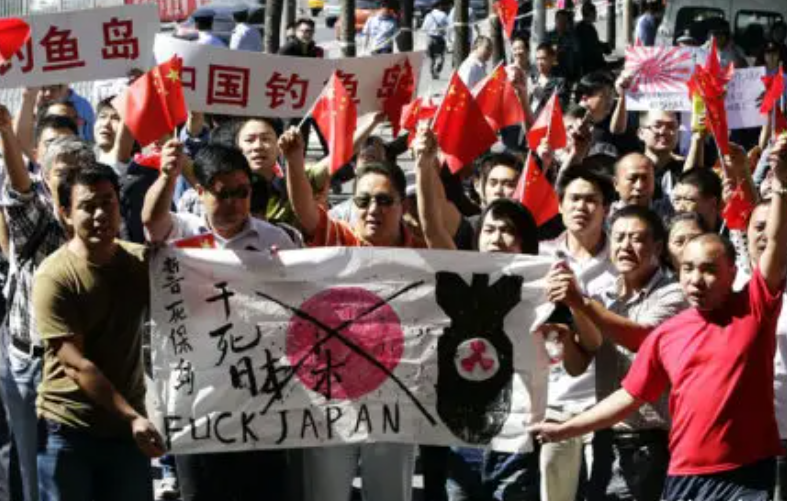
On the other hand, China and Korea still have grudges with Japan, which erupt from time to time, usually about issues such as high-profile visits to Tokyo’s Yasukuni Shrine, or any nuances in the language of apologies by the Japanese government that seem to downplay the extent of wartime atrocities. China also actively indoctrinates its citizens to keep their hate for Imperial Japan alive in the present day, and weaponizes this sentiment against modern Japan’s strategic alignment with the United States.

ANTI-JAPANESE DEMONSTRATION IN CHINA By Imgur, Weibo

But Taiwan, of all Japan’s former colonies, is an outlier. The “beautiful island” has maintained, over the years, and in the aggregate, a uniquely positive perspective on its colonial period, 1895–1945.

Many old-timers who had lived through that era looked back at those “good old days” with nostalgia. Although most them have now passed away, that was not before had shared their feelings of the Japanese as “tough but fair” and “better rulers than the mainlanders” with their families. Quite a few Taiwanese had even embraced full-on Japanization. Taiwan’s first locally-born president, Lee Tung-hui, went to university in Japan and became a second lieutenant in the Imperial Japanese Army in charge of an anti-aircraft gun in Taiwan in 1944. When he met former Japanese Prime Minister Shinzo Abe, he told him: “Before 1945, I was Japanese.”

LEE TUNG-HUI (Right) AND HIS OLDER BROTHER LEE TENG-CHIN By BBC News

Meiji Magic

A lot of this pro-colonial sentiment can be put down to the indoctrination by the Imperial Japanese government of Taiwan, which pursued an ever-intensifying policy of cultural assimilation. But there is more to it than that.

It is well known that a profound modernization of Taiwan was begun under the leadership of Taiwan’s third Japanese governor-general, Kodama Gentarō, and his minister of civil affairs, Gotō Shinpei, both in office from 1898 to 1906. In particular, it was Gotō’s “Meiji spirit” that led to the transformation of Taiwan from a chaotic and unhealthy backwater to the model colony that Japan desired.

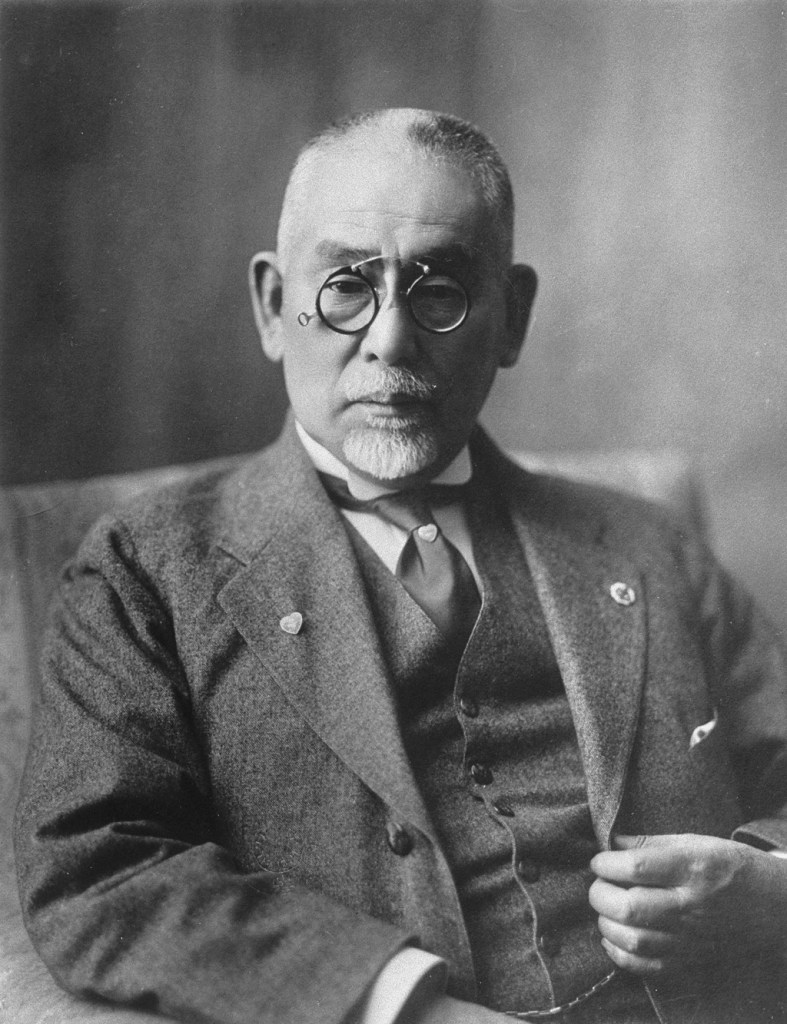
PORTRAIT OF GOTO SHINPEI

With Kodama’s full support, Gotō’s accomplishments were truly impressive. In addition to basic improvements in public health like creating hospitals, managing opium addiction, and developing modern infrastructure for sewage and drinking water, Gotō, per Wikipedia: “established the economic framework for the colony by government monopolization of sugar, salt, tobacco and camphor and also for the development of ports and railways. … By the time Gotō left office, he had tripled the road system, established a post office network, telephone and telegraph services, a hydroelectric power plant, newspapers, and the Bank of Taiwan. The colony was economically self-supporting and by 1905 no longer required the support of the home government despite the numerous large-scale infrastructure projects being undertaken.”

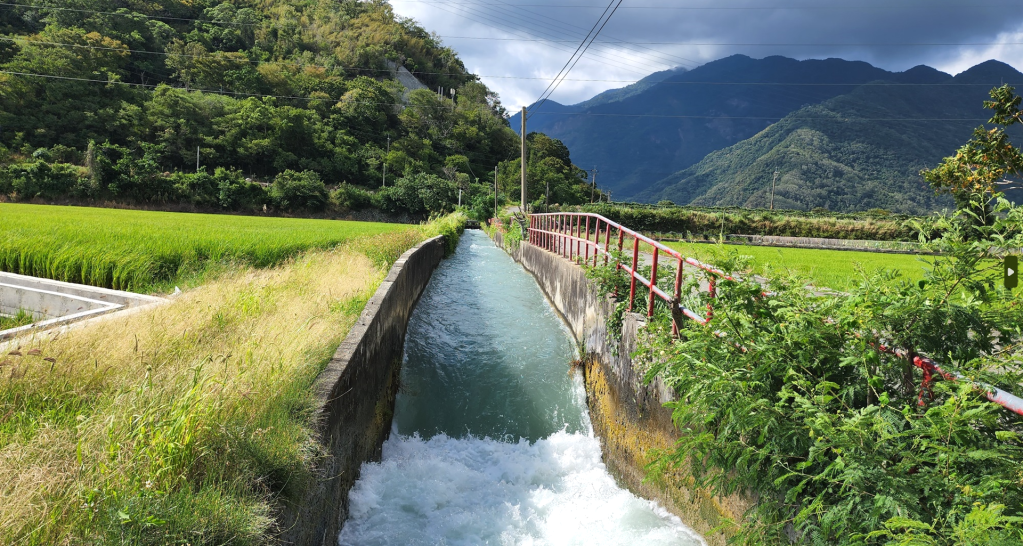
Later administrations continued modernization with similarly ambitious projects, including the completion of the Western Trunk Line railroad from Keelung to Kaohsiung in 1908, the development of high-yield Japonica rice in the 1920s, the establishment of Imperial Taihoku University (the forerunner of National Taiwan University) in 1928, and the completion of the Chia-nan Canal irrigation system in western Taiwan in 1930. Taiwanese alive during this time could not have failed to be impressed by these changes, which brought tangible improvements to their quality of life.

PART OF CHIANAN IRRIGATON SYSTEM By Ministry of Agriculture

Rosy Retrospection

Of course, these advances were not done out of altruism, but to make Taiwan into a strategic asset for imperial expansion. Taiwan was an important source of rice for Japanese troops, and the island’s airfields, ports, and coastal waters played a critical role in the invasion of the Philippines in 1942. The Meiji slogan was, after all, “Enrich the country, strengthen the military” (fukoku kyōhei). Gotō himself was a staunch defender of Japanese colonial policy in China, despite its many excesses.

Also, it should not be forgotten that, before the modernization of Taiwan truly began, there had been a forceful military occupation. Although Qing China had ceded Taiwan to Imperial Japan in the 1895 Treaty of Shimonoseki, many on the island fiercely resisted their new rulers. Tens (some say hundreds) of thousands of ethnic Chinese militia members and indigenous fighters were slaughtered in the pacification campaigns from 1895–1915, although most of these were over by 1902. (Some indigenous resistance lasted until the early 1930s.) Mass murder and rape by Imperial Japanese troops were committed against villages who supported the rebels, or were simply in the area where they operated.  

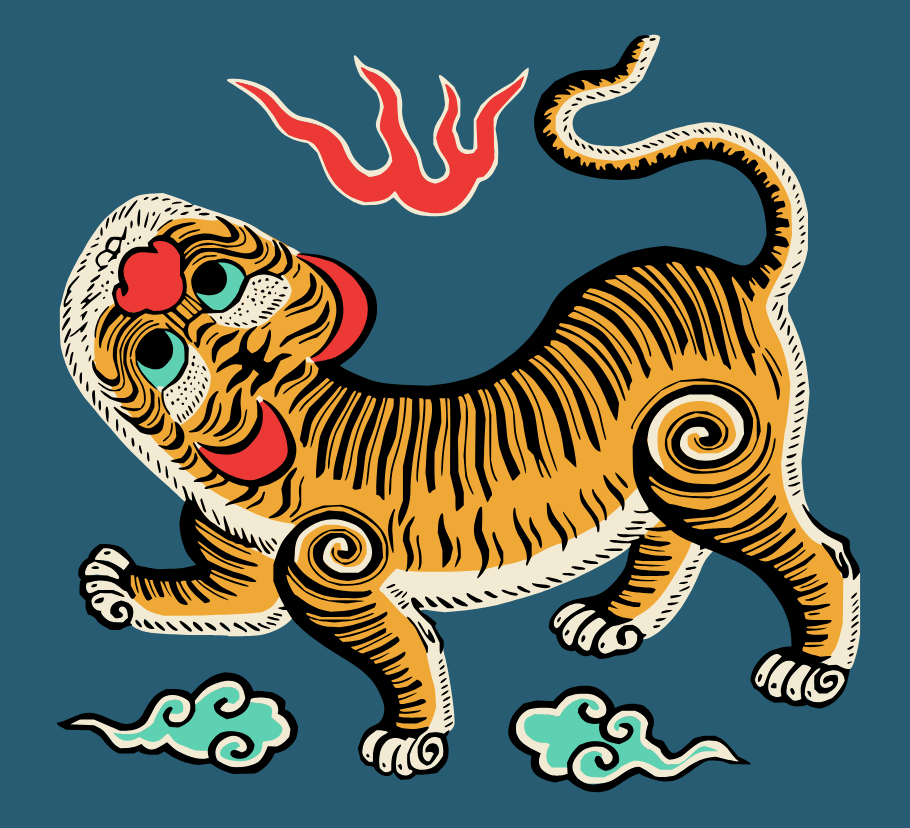
“YELLOW TIGER FLAG” OF THE SHORT-LIVED REPUBLIC OF FORMOSA: MAY TO OCTOBER 1895 By Henry Szytko

It is hard to know how widespread the knowledge of the slaughters and atrocities would have been within Taiwanese society. Much of the bloodshed occurred in the countryside or mountain areas, removed from coastal urban centers. In Taipei, business leaders like Koo Hsien-jung (founder of today’s multi-billion-dollar business empire the Koos Group) had actually invited the Japanese to take over to relieve the city from rampaging Qing soldiers from mainland China. It is unlikely that Japanese officials would have openly advertised their own side’s war crimes, or permitted pubic discussion of them. Hence, Taiwanese living during the colonial period could perhaps be forgiven for living in a rose-colored bubble.

Nor would there have been widespread knowledge of the treatment of POWs in Taiwan during World War II. According to researcher and Taiwan POW Camps Memorial Society director Michael Hurst, Japan operated 16 prisoner of war camps (including two temporary camps) between August 1942 and September 1945. Hurst says that Japanese records show that 4,344 allied servicemen were held as POW’s in camps in Taiwan during this period, 430 of whom died in the camps and more afterward as a result of their treatment by their captors. The worst was at Kinkaseki (now called Jinguashih, a village on a mountain that rises above the coast in Ruifang District of New Taipei City, not far south of Keelung) where starved and beaten prisoners were forced to work in inhuman conditions in the copper mines.

However, after the end of the war, the truth was revealed, not only of evil deeds in Taiwan, but much fouler ones done in China and elsewhere. Many from the “mainlander” exodus to Taiwan 1949–1950 would have brought their own reports of brutality. The Chiang Kai-shek regime in Taiwan was initially very anti-Japanese, destroying many Shinto shrines, jailing wealthy “collaborator” businessmen like Koo Chen-fu, the son of Koo Hsien-jung, and even forbidding the screening of Japanese films for years. But this animosity didn’t last long, at least not publicly. It was China that the KMT were obsessed with, not Japan.

Taiwan President Ma Ying-jeou did briefly seem to try and resurrect anti-empire sentiment with memorial events and statements to the press in 2015the 70th anniversary of the end of the war. This may have been an attempt to get Taiwan to shake off its “Japan-mania” and harmonize with China’s position. But it soon fizzled out, and under successive DPP-led governments, August 15 and September 2the dates in 1945 when the Japanese surrender was first announced on a recorded radio broadcast by Emperor Hirohito, and when the Japanese Instrument of Surrender was signed on the deck of the USS Missouri in Tokyo harborpass in Taiwan each year with only a few small media events about Taiwan’s “comfort women” and a couple of routine press releases from the government.

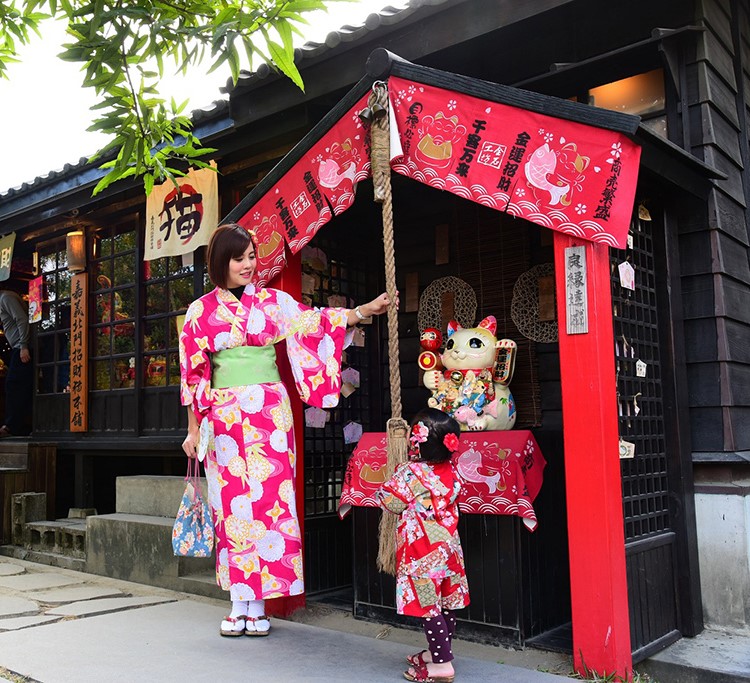
There is close to zero general public interest in POW memorial events. Taiwanese have let the war go. Yet local tourists continue to flock annually in the millions to colonial-era-themed attractions like Hinoki Village in Chiayi, Hayashi Department Store in Tainan, and old streets with Japanese baroque architecture such as Dihua Street in Taipei and elsewhere. Why this persistent affection for the colonial period, and apathy about Japanese war crimes?

PLAYING JAPANESE WITH MOMMY AT HINOKI VILLAGE, CHIAYI

No one can definitively answer this question. But it is likely that a combination of factors prevented a strongly anti-imperial cultural movement from becoming entrenched in Taiwan.

One factor is that the KMT leadership of Taiwan was considered inept and kleptocratic in the initial years of rule. They displaced the Taiwanese elite, whom they distrusted, and then flooded the country with over a million refugees from the Chinese Civil War, which was hugely unpopular. To most Taiwanese living through the first decade of Republic of China rule, life in Japanese times might have seemed good in comparison, especially considering the social tensions after the 2 28 Incident and the subsequent White Terror. Furthermore, many among the Taiwanese elite had had friends and business partners among the Japanese community, another reason to be tactful in later years: people shouldn’t publicly criticize their friends, especially if acknowledging their misdeeds would also implicate themselves by association. Hence, better for the old-timers to just stick with the “good old days” trope and leave the rest alone.

A few decades on, Japanese purchases of Taiwan-made products, and the transfer of technology to Taiwanese vendors and subsidiaries, made a significant contribution to Taiwan’s economic miracle of the 1970s. So, even those with a “mainlander” background might have avoided speaking out about the war to avoid friction with their new business friends. Japan remains a very important business partner to this day.

There is also the fact that—unlike Korea and China—Taiwan before Japanese occupation lacked a clear and distinct sense of identity. Replacing the Qing’s inconsistent and corrupt rule with a “Meiji Taiwan” was arguably an improvement, in contrast to the humiliation felt by the Chinese and Koreans, whose own proud traditions were subjugated. Hence, Taiwanese were free to become avid consumers of modern Japanese culture—including anime and J-pop—during its renaissance in the 1980s and 1990s, without any bitter aftertaste of an historical grievance. This only added to the significant influence of Japan on Taiwanese music, a hold-over from the colonial era.

This 80s and 90s also coincided with the rise of Taiwan’s human rights and self-determination movement, which culminated in Taiwan’s first democratic presidential elections in 1996. The intellectual roots of this movement trace back to the “Taishō Democracy,” a period of liberalization in Japan—where many Taiwanese intellectuals attended university—and in Taiwan itself, which grew strongly from 1912–1926, under the short reign of the Taishō Emperor.  Hence, leaders of the pro-Taiwanese-autonomy side of the political spectrum also tended to look back appreciatively at these times, in contrast to the Sinocentric narrative of the KMT.  

Now, in 2024, with the threat of annexation by the People’s Republic of China, Taiwan, sitting anxiously outside the US nuclear umbrella, attaches great value to Japan’s political and military support, such as it is. This is another reason to keep the tone of discourse positive.
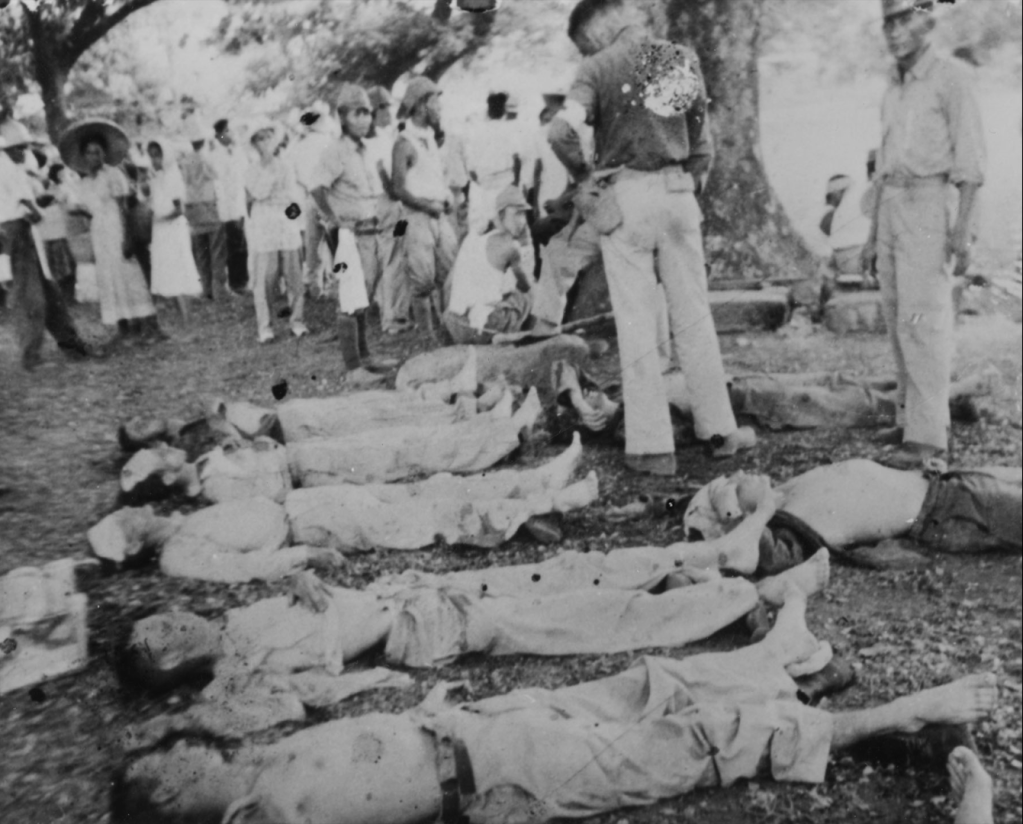
JAPANESE MARITIME SELF-DEFENSE FORCE DESTROYER KURAMA LEADS OTHER VESSELS, 2012. Photo credit :Itsuo Inouye/AP

Taken all together, this might be considered a list of compelling motivations for Taiwan to have looked away from the dark history of Imperial Japan. Focusing on the positive aspects of the empire might simply be described by Taiwan’s favorite adjective—convenient.

Visits to Yasukuni

Is it possible that Taiwan has also borrowed Japan’s own aversion to doing a deep dive into wartime guilt? Approximately 200,000 Taiwanese served the Japanese military in the war: some were conscripted, but many fought proudly for the emperor. A few were even guilty of war crimes themselves. At the Yasukuni Shrine in Tokyo, 27,863 Taiwanese (many from indigenous communities) have their names listed, among a total of 2,466,532 people who died in the service of Japan in wars under the Meiji, Taishō, and Shōwa (Hirohito) emperors.
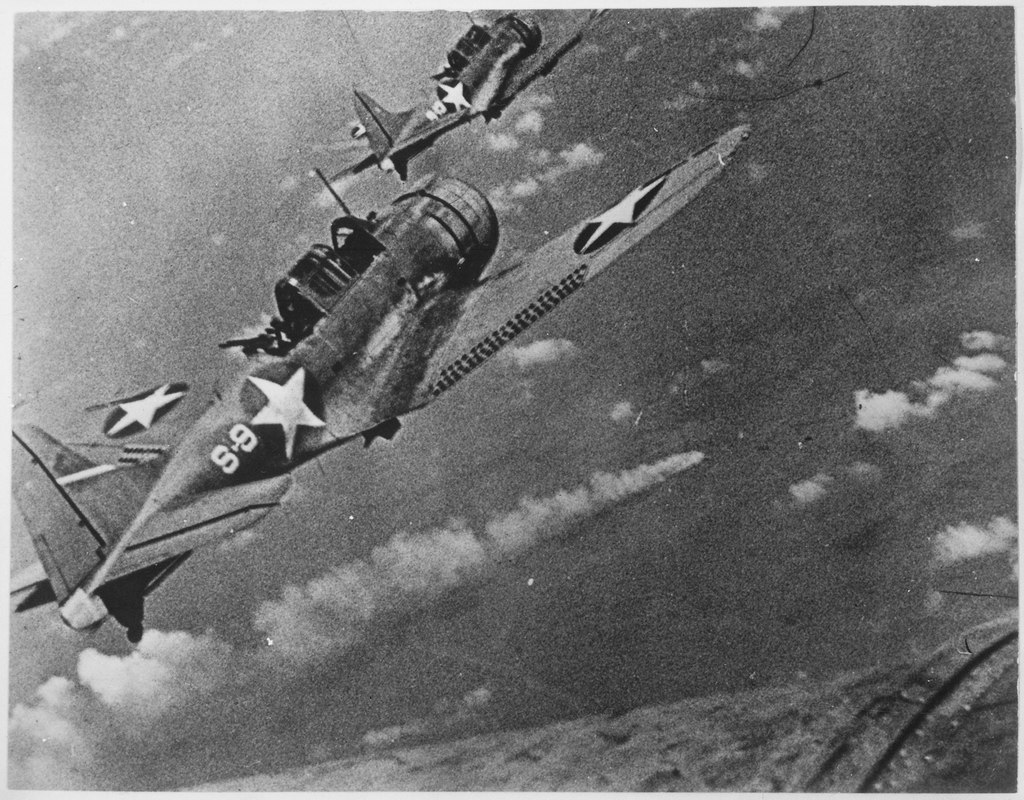
An interesting YouTube video by Hikelopedia about Taiwanese at Yasukuni.

The shrine is source of controversy due to the fact that among the names honored there are those of 1,066 war criminals, 11 of whom were convicted of class A war crimes by the Tokyo War Crimes Tribunal. These include Japan’s ultranationalist war-time prime minister Hideki Tojo, and also Akira Mutō, implicated in both the Nanjing and the Manila massacres.

Hirohito (the Shōwa Emperor) eschewed any visits to the shrine due to that fact. But, per Wikipedia: “Former prime minister Junichiro Koizumi made annual personal non-governmental visits from 2001 to 2006. Koizumi’s expected successor, Shinzo Abe, visited the shrine in April 2006 before he took office. … Abe publicly supported his predecessor’s visits to the shrine, and he made at least one visit to the shrine during his term as prime minister.”

These high-profile shrine visits were criticized by China, Korea, and Russia as glorifying the nationalistic militarism that led to horrific abuses in World War II, atrocities that have often been downplayed by revisionist historians in Japan.

However, the Yasukuni Shrine was not intended to be a symbol of militarism, but rather as a way to honor the dead. Virtually every family in Japan has the name of a relative inscribed there, a sad reminder of the huge human cost that Japan paid for losing the war. Lee Teng-hui himself visited the shrine in 2007, to honor his brother Lee Teng-chin, who died as a member of the Imperial Japanese Navy in Manila in 1945. His name is there along with that of Cheng Tze-Chang, the father of Hong-Ming Cheng.

Coming Full Circle

As mentioned before, H.M. returned to Taiwan in 2008 to do family research and make his Yasukuni visits. During this time, he looked into the history and culture of Tamsui, where his parents got married and lived as a young couple. This knowledge is what led first to the creation of a blog in Mandarin about the Shinsei Maru in 2007, and then shortly afterward his famous English-language history blog, “The Battle of Fisherman’s Wharf” in 2009. It should come as no surprise then that there are quite a few posts in both blogs about civilian casualties from American aerial bombings of Taiwan in World War II. These air raids started in 1943, and intensified in 1944 and 1945, killing approximately 5,500 Taiwanese, according to Japanese records from that time. The attacks were part of a wider strategic aerial campaign in the Western Pacific, one which also sank the Shinsei Maru.

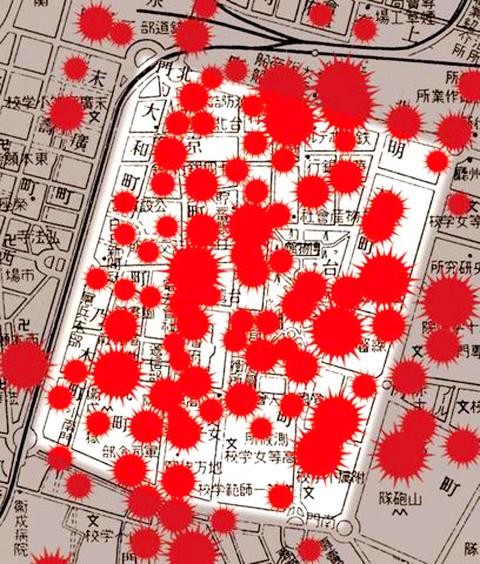
LOCATION OF BOMBS THAT LANDED DURING THE RAID ON TAIPEI, MAY 31, 1945.

Other posts by H.M. (signed by his blogger alias, “EyeDoc”) talk about the sadness of the hundreds of thousands of Japanese residents of Taiwan—not just soldiers or bureaucrats, but people from many walks of life—who were deported back to Japan in 1946. Some of them kept in touch over the years, made nostalgic return visits to Taiwan, or had reunions in Japan decades later. While interesting as tidbits of history, the way these stories are told, their seemingly pro-Japanese tone, might rub some people the wrong way. After all, the Americans were the good guys, right?

Well, not during the war they weren’t, not to most Taiwanese. Afterward, when the bombs stopped, and friendly Americans offering aid money started coming in, that was another story. But all of that was so long ago. Taiwan is a different place now, and the Taiwanese have moved on—almost all of them. H.M.’s lingering resentment against American aerial attacks is understandable, considering that they cost him a father and his mother a husband. As he says in Shinsei Maru Story, “… for families of the war-dead, mourning is forever, for there is really no such thing as closure.”

In any case, whatever your personal perspective, Shinsei Maru Story is an authentic glimpse into that fascinating and tragic time in history.

—————————————————————————————————-

Posted in Uncategorized | Tagged , , , , , | Leave a comment

Stories of the Past from a Son of Taiwan

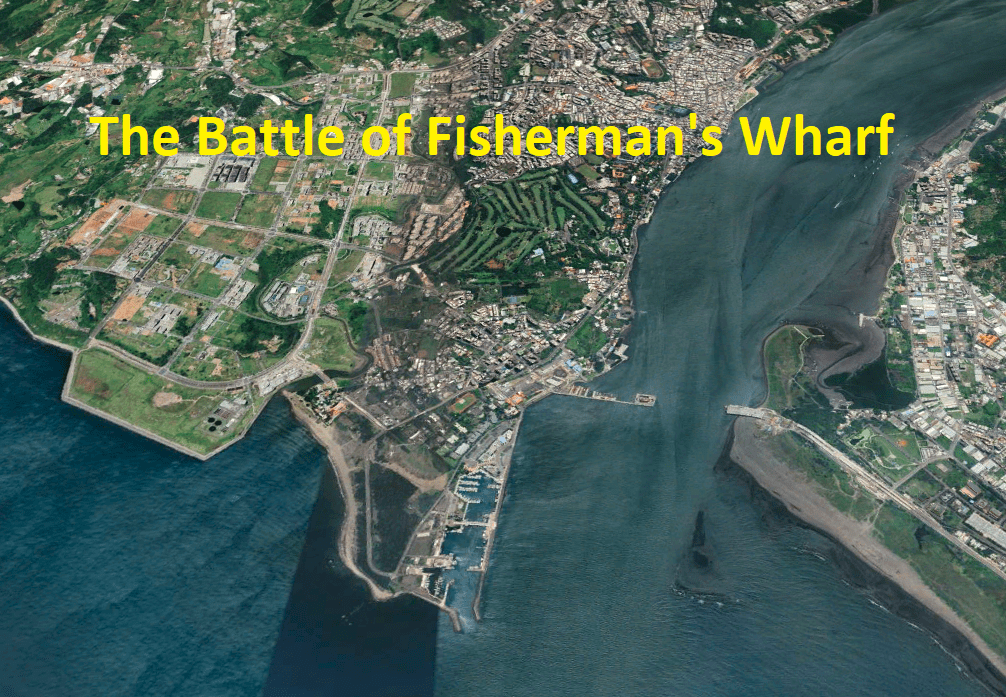
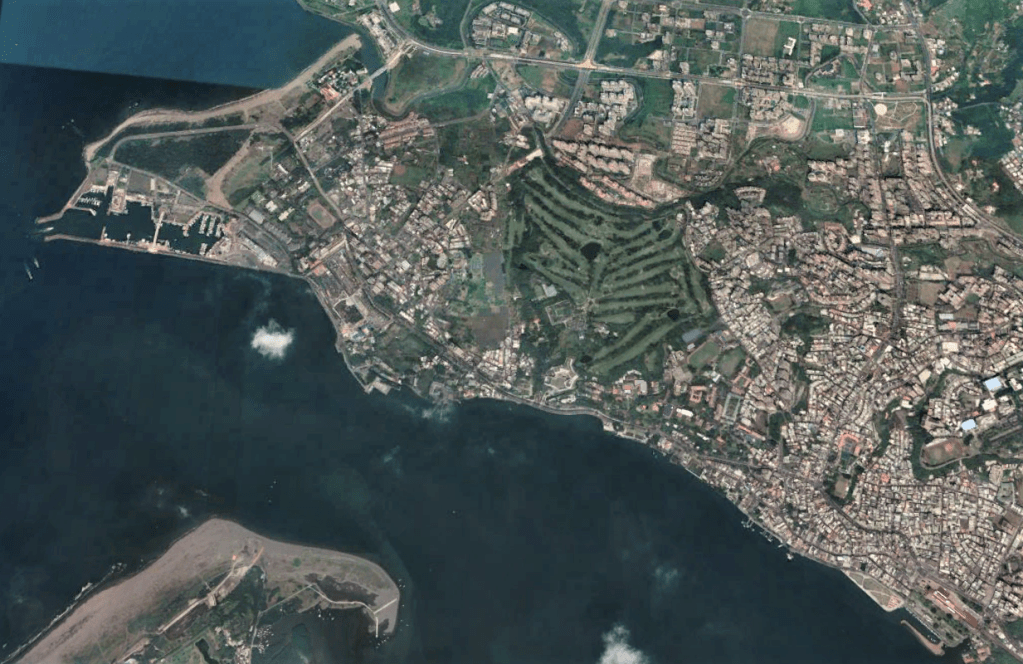
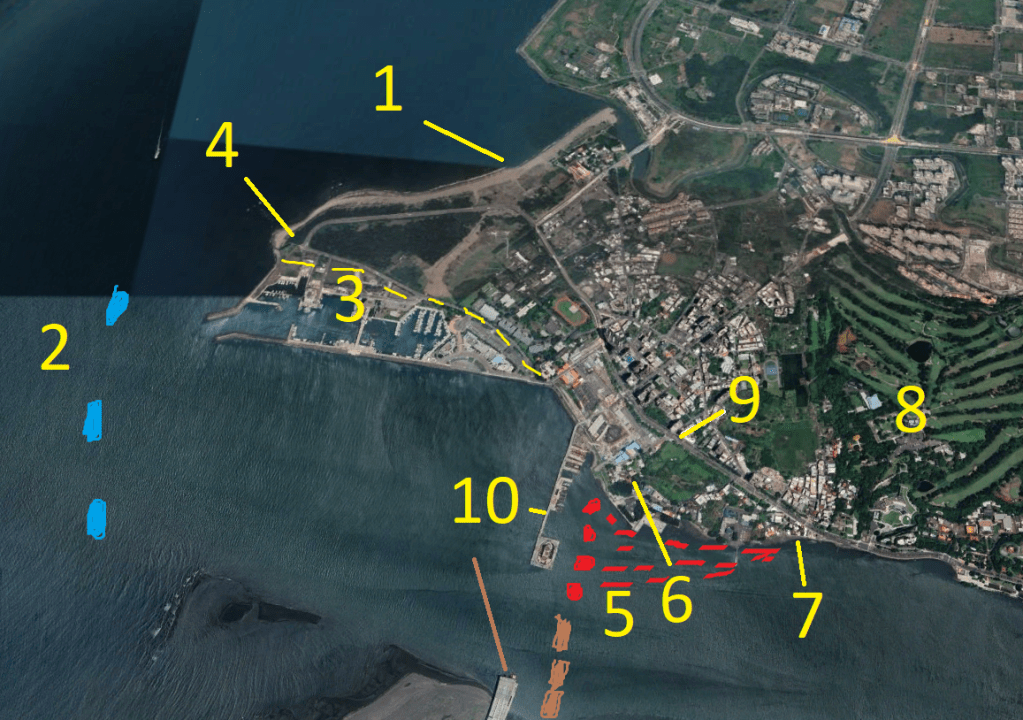
THE MOUTH OF THE TAMSUI RIVER (Google Earth)

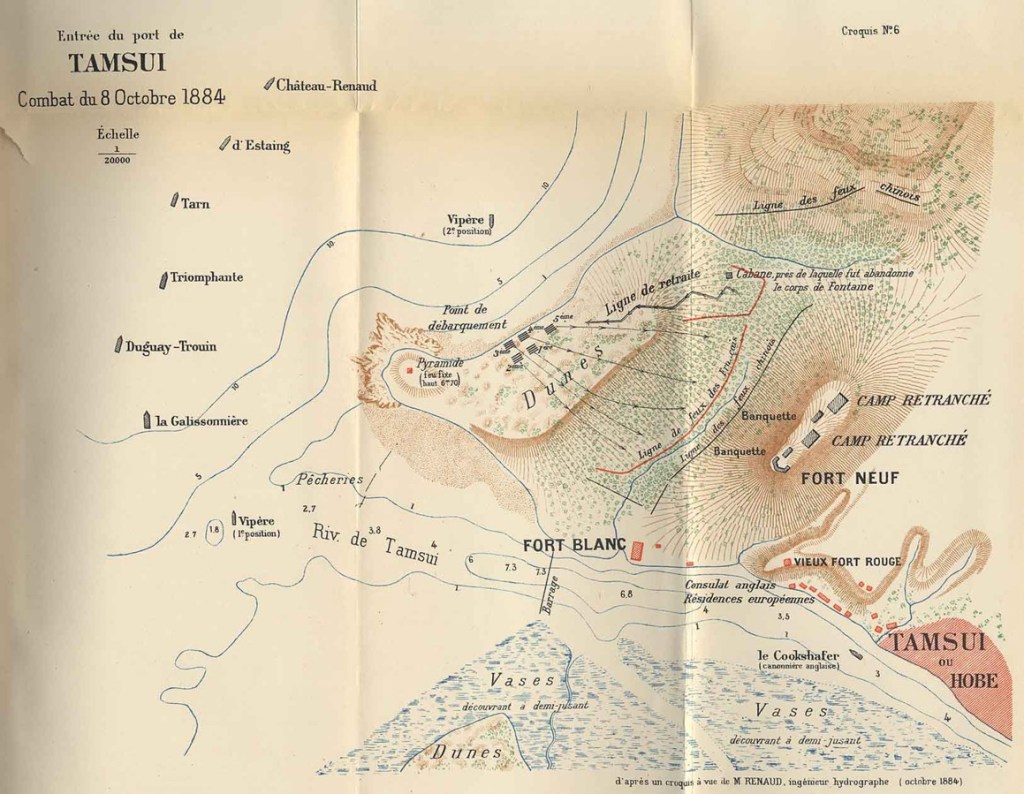
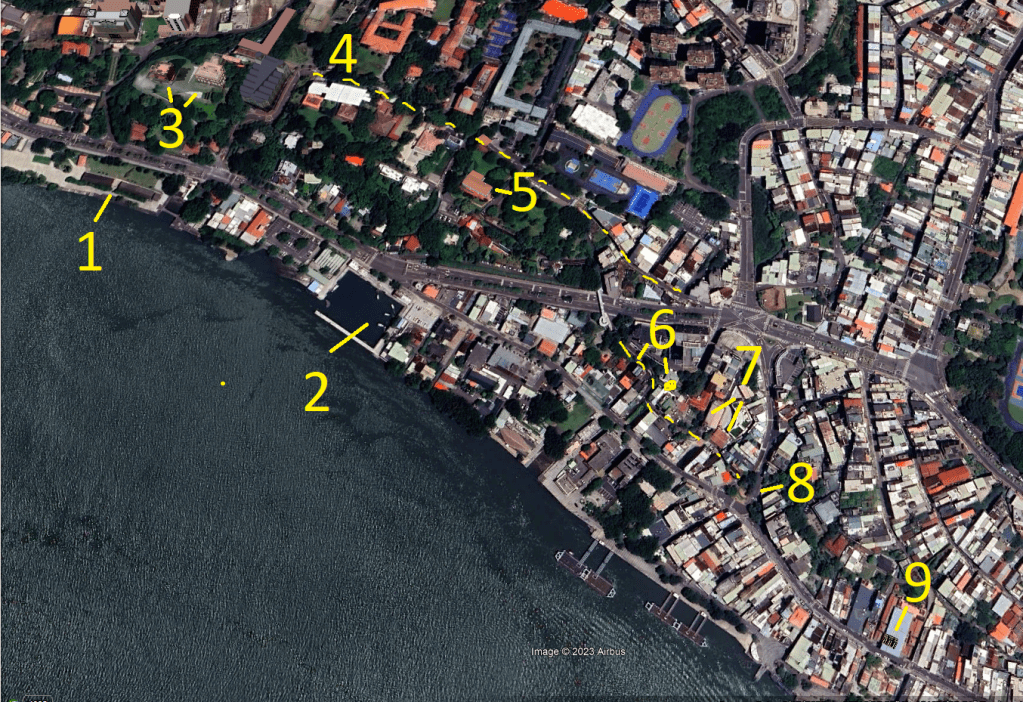
The mouth of the Tamsui River has long been a strategic location, as the gateway into the Taipei Basin from the sea, and a rare natural harbor on the north coast of Taiwan. This is why, over the centuries, the strip of land on the right bank of the river, next to the river-mouth, has been visited and claimed by waves of acquisitive interlopers: the Spanish, the Dutch, the Tung-Ning Kingdom, the Qing, western merchants, and the Japanese. Many other parts of Taiwan have had the same historical succession, but few of them show it as well as Tamsui does.

On weekends, if the weather is nice, thousands of tourists flock to this town, once known as Huwei or Hobe, and enjoy visiting the very old temples, narrow winding streets, 19th century buildings, forts, and battlegrounds, along with the lovely mountain and sunset views, of course. As a long-term Tamsui expat, I have had the chance to learn a bit more about the history behind the tourist sites. One of my best sources for this has been the English-language blog called “The Battle of Fisherman’s Wharf” (a humorous title, as there was no actual battle of that name) written by a Taiwanese-American amateur historian. His full name is Hong-Ming Cheng, but he often goes by the online nickname “EyeDoc,” as he is an expert in (among other things) the field of ophthalmology. He is a true “Tamsui-lang” (Taiwanese for “Danshui-ren” or “Danshuite” as we might say in English) as he was born and grew up here as a child.

MAIN PHOTO FROM THE BLOG

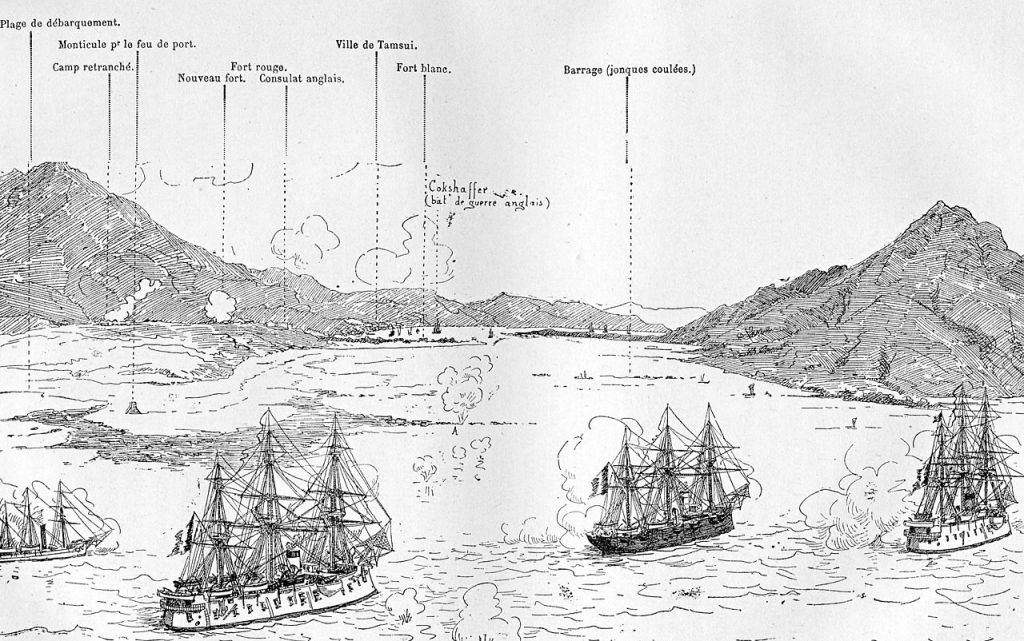
EyeDoc’s blog is highly regarded by local history buffs as a cornucopia of fascinating nuggets of information and hard-to-find maps, documents, and photos from the past. From 2009 to 2019, he made 351 posts, garnering more than 100,000 visits. The meticulously-researched articles are mostly Tamsui-focused, from a local perspective. But many also touch on issues of wider regional scope. There is a great variety of content, including, but not limited to: interactions between the Han and indigenous people; local Tamsui traditions – such as fishing and temple events – and persons of note, like famous doctors, teachers, and leaders; lesser-known features of famous buildings, such as Fort San Domingo and the Qingshui Temple; and the doings and sayings of important westerners like Canadian missionary Dr. George Leslie Mackay, British tea-merchant John Dodd, (“the father of Formosa Oolong”) and British consul Alexander Frater. Most notably, it includes detailed coverage of the Battle of Tamsui, October 2-8, 1884, in which the French attacked the town in an unsuccessful attempt to make it a bargaining chip in the Sino-French War. And also, very significantly, it contains an unusually insightful and empathetic look at the social history of Tamsui and Taiwan during the Japanese colonial period, 1895-1945. There’s also stuff about the origins and ingredients in local food and beverages, the history of the cultivation of tea and rice, and much more.

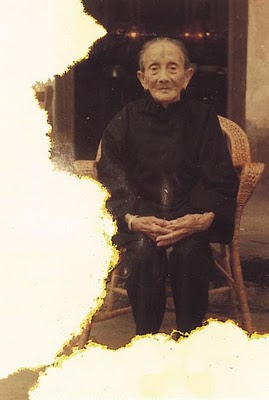
ELDERLY INDIGENOUS WOMAN IN MIAOLI, 1950s (BOFW)

 It’s a huge and varied buffet of information, but here are just a few tidbits, some of my favorite interesting discoveries from the Battle of Fisherman’s Wharf. (Links to the blog provided.)

1)  The Delta

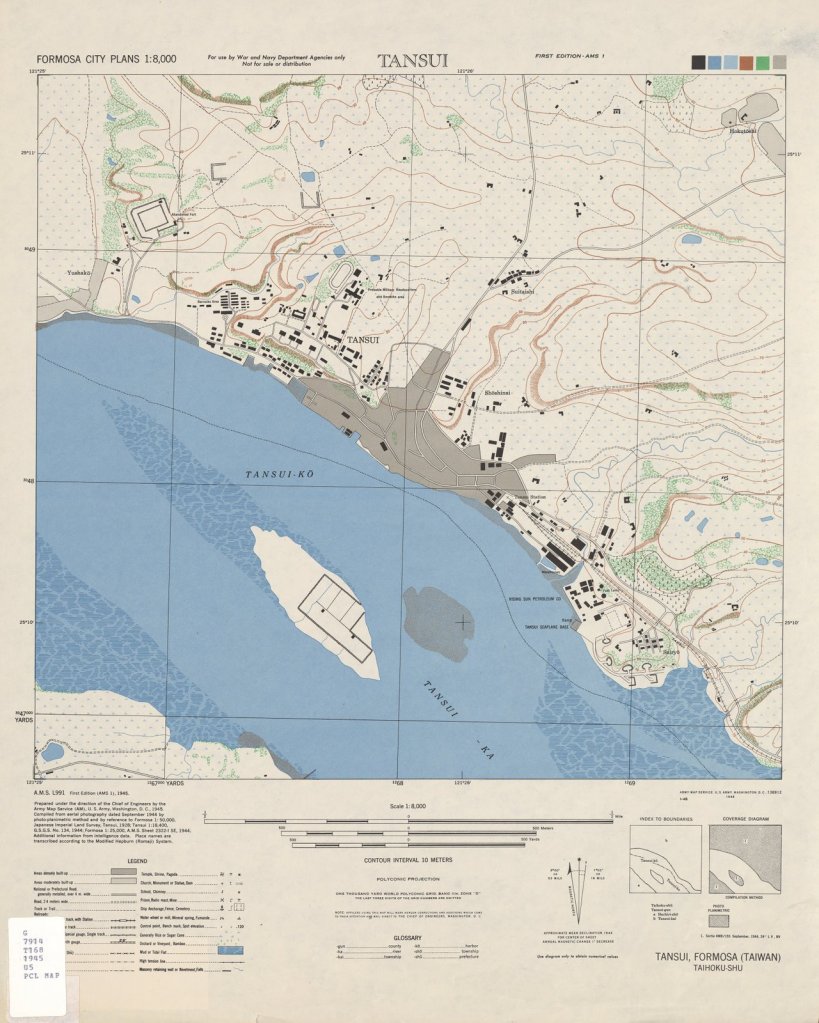
There used to be an island in the Tamsui river just offshore from the main well-known riverside area, that men sometimes swam out to on a dare. It was called “the Delta,” and it had grass and even the grave of an orphan who had drowned nearby. It is gone now, with the leading theories on how it disappeared being either the rush of water following blasting work at Guandu in 1964 to widen the river channel, or aggressive commercial sand dredging in the river. In any case, now there are only exposed sandbars that appear at low tide.

https://danshuihistory.blogspot.com/2009/03/memories-of-and-more.html

https://danshuihistory.blogspot.com/2009/05/disappearance-of-delta.html

WARTIME JAPANESE MAP OF TAMSUI SHOWING THE DELTA (BOFW)

This discovery tuned me in to the fact that the river is always changing, usually through human activity. Earlier maps don’t show the Delta, but the Japanese era map shown above did, corroborating old timers’ accounts. Did development of the Taipei Basin under the Qing lead to a build-up of silt, which caused the Delta to form?

2) Cheng shall not marry Shi!

To this day, members of the Cheng (older pinyin for Zheng) family in Taiwan are forbidden by custom from marrying members of the Shi family (施). This is due to historical events long ago. Shi Lang (施琅) was a 17th century Fujianese admiral of noble birth. According to EyeDoc, Shi Lang had a run-in with Zheng Cheng-gong (Koxinga), while serving in the military commanded by his father, Zheng Zhi-long. Shi Lang had refused a direct order, so Zheng Cheng-gong ordered his death, as well as that of his father, brother, and son. Shi Lang alone escaped execution, and defected to the enemy Qing. Decades later, he directly aided the Qing in their October 3rd, 1683, conquest of the Kingdom of Tung-Ning on Taiwan, ruled by Zheng Cheng-gong’s descendants. Promoted to Marquis, Shi Lang harshly governed large portions of the developed land in Taiwan for his own profit.

SHI LANG (Wikipedia)

With all this bad blood between the two families, it is no wonder that they decided to keep their distance, at least back in that historical period. What is surprising is that this prohibition is still customary for many families, to this day.  

https://danshuihistory.blogspot.com/2011/09/you-are-marrying-whom.html

For example, In 2009, a woman surnamed Shi, in love with a man from the Zheng family, had to change her name to Lin in order for the families to allow the marriage.

https://news.tvbs.com.tw/life/151727

I find this interesting because it reveals a kind of cultural memory process of long-ago events, like a wave, perpetuated over the centuries by tradition. What other interesting “memory waves” are propagating out there through Taiwanese culture? 

3) Pedro the First

The first expat permanent resident in Tamsui was not Dr. Mackay, but rather a Spanish (some sources say Italian) sailor from the Philippines called Pedro Florentino, who fell overboard near Tamsui around 1856 and was picked up by a local fisherman. Brought to Tamsui, he eventually married the daughter of a migrant sailor from Fujian. Their descendants sill live in Tamsui today, near the Foreigner’s Cemetery, where the remains of Pedro himself were buried.

https://danshuihistory.blogspot.com/2014/12/the-first-expat-in-tamsui-pedro.html

Why I love this story: Although the circumstances of my arrival to Taiwan were somewhat different than Pedro’s, I feel that he is kind of the first of “us” – the expats who decided to stay. I am happy to count him as a cultural ancestor.

The History Behind the History

Although he isn’t a formally trained historian, EyeDoc’s stuff is very solid. He’s clearly a smart guy and is very careful. He has given speeches at universities, consulted on research projects, and is widely regarded as a sort of “Yoda” of Tamsui history. His articles are based on a combination of primary sources, archival material, and contributions from a deep network of experts and community insiders on a number of topics. For example, he’s in personal contact with Dr. George Leslie Mackay’s descendants, and has family members on the management committee for the Tamsui Fuyou Matsu temple.

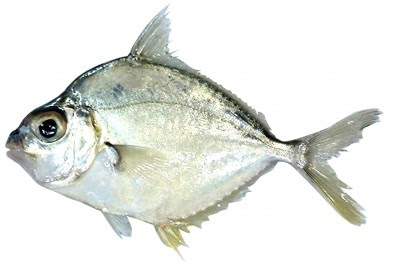
PONY FISH – THE “SINGNG FISH” OF THE TAMSUI RIVER
(BOFW)

So how did a medical-science man end up writing about Tamsui history? Well, you could say he comes from a family background well-suited to inspire engagement with stories of the past. EyeDoc says his Zheng family lineage descends from a son of Koxinga’s father, Zheng Zhi-long (鄭芝龍), with a different woman than Koxinga’s mother. That’s kind of like an American being a distant relative of George Washington. EyeDoc’s Cheng (Zheng) ancestors came to Taiwan from Xiamen in the early 1880s. One of his grand-uncles, Cheng Mu-bi  (鄭木筆), gave medical treatment to Qing General Sun Kai-hua (孫開華) for stomach problems soon after the Battle of Tamsui in October 1884. The maternal side of his family kept many commercial and family records (some in bamboo tubes) from the time of the Qianlong Emperor until the Japanese period, which have been  donated to the National Taiwan Library in Zhonghe District, Taipei City.

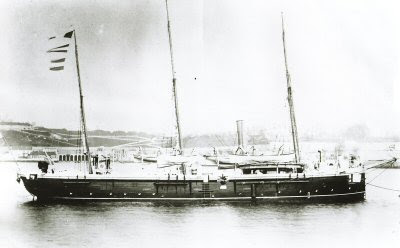
HMS COCKCHAFER – THE FAMED BRITISH GUNBOAT TRAPPED IN TAMSUI HARBOR DURING THE BATTLE OF TAMSUI (BOFW)
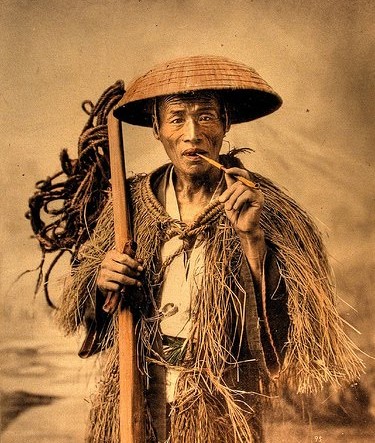
JAPANESE COOLIE IN TAMSUI, 1895 (BOFW)

EyeDoc left Taiwan in the 1960s to study medicine in the USA, and ended up having a distinguished career, which included being a professor of ophthalmology at Harvard Medical School. When he returned to do ophthalmic research in Taiwan in 2009, his interest in Tamsui history was revived. But he had one problem: his “clumsy fingers” in typing Chinese after decades living abroad! So, he decided to write the Battle of Fisherman’s Wharf in English.

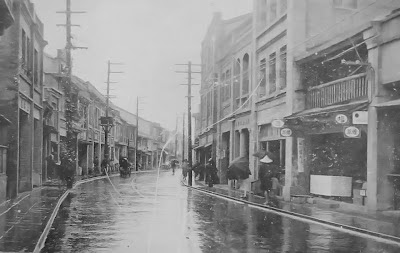
LOOKING WEST ON TAMSUI OLD STREET, 1940s (BOFW)

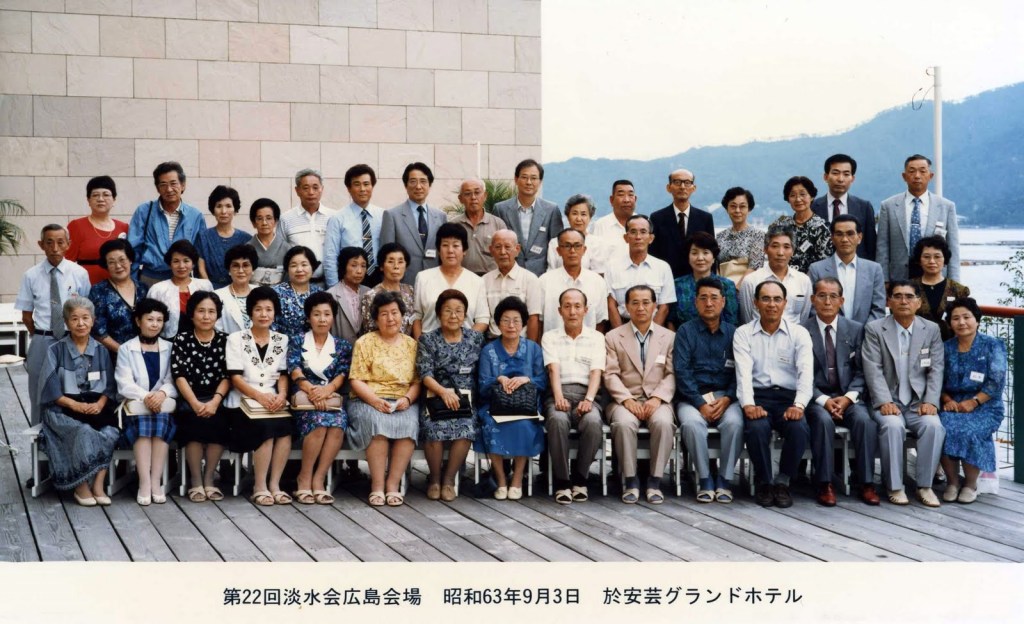
TANSUI-KAI, FORMER JAPANESE RESIDENTS OF TAMSUI, GATHERED IN HIROSHIMA IN 1988 (BOFW)

This turned out to be a boon to the expat community, as few of us have the level of reading skills necessary to wade through articles on history in Mandarin with all their nuances and linguistic variations. But even if only in Mandarin, the blog would still have been an excellent way to preserve and disseminate information about Tamsui and Taiwan history for future generations.

EyeDoc, as a real Tamsui-lang, has given us many great stories about the Taiwanese history he and his family have been part of.

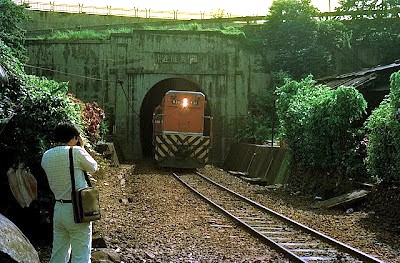
LAST TRAIN TO TAMSUI: GUANDU TUNNEL WITH DIESEL ENGINE R123 EMERGING, JULY 15, 1988. (BOFW)

However, sometimes being part of history is a mixed blessing. EyeDoc’s distant ancestor, Zheng Zhi-long – the father of Koxinga – knew this first hand, as he was executed by the Manchu Qing in 1661 for his son’s continued resistance against them. In more recent times, Taiwan’s history came to a head when the Japanese took over the island, and then, decades later, dragged Taiwan into the Pacific War. That’s when EyeDoc’s family along with millions of other people – got far too close for comfort to “the flow of history,” to say the least.

Much more about that in the next article, the Shinsei Maru story.

—————————————————————————————————————————–

Many thanks to HM Cheng for his kind cooperation. All photos above marked (BOFW) are from The Battle of Fisherman’s Wharf Blog with his permission.

Posted in Uncategorized | Tagged , , , , | Leave a comment

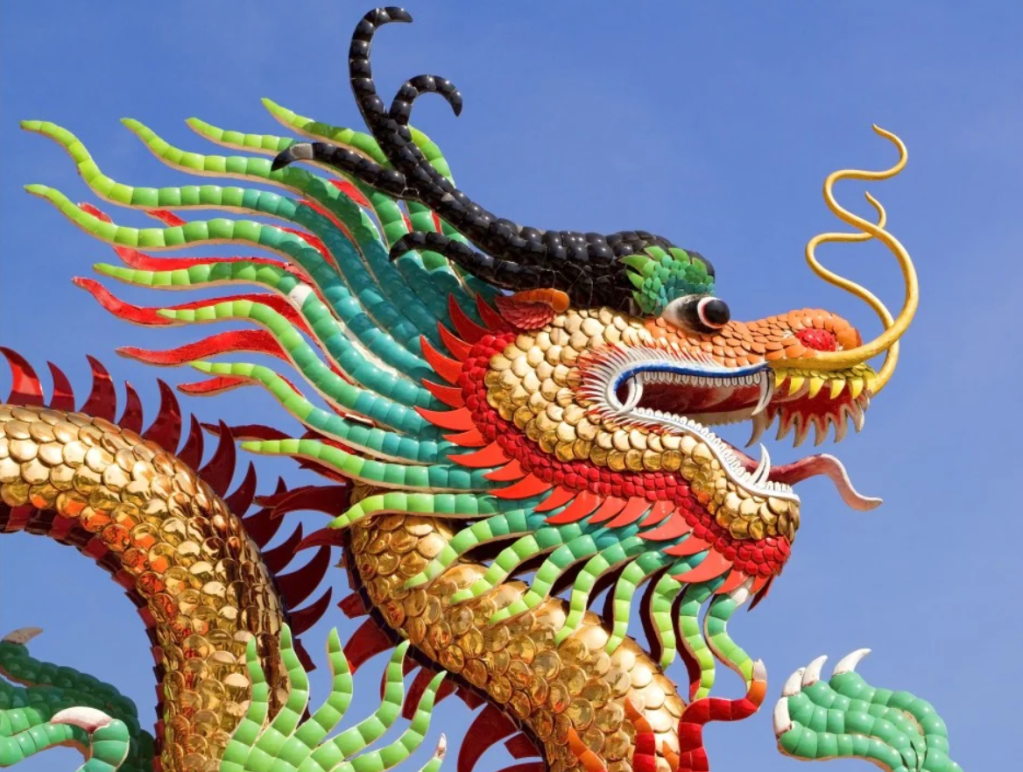
Happy Year of the Dragon!

It’s that time of the year again: Chinese New Year or Lunar New Year. But the Chinese Calendar and how it relates to both practical time-keeping and religious symbolism is extremely detailed and complex. What’s more, certain cultural aspects surrounding the holiday can be a bit hard to figure out. Hence, the following is intended to be a reasonably accurate simplification of some of the main confusing features of this global event, as seen from the point of view of a curious expat based in Taiwan.

Should it be Chinese New Year or Lunar New Year?

I think the most reasonable verdict on this one is that both are accurate. Other countries in East Asia, for example Korea and Vietnam, celebrate a Lunar New Year heavily influenced by traditional Chinese culture. However, there are a few differences. For example, Vietnam has the Year of the Cat instead of the Year of the Rabbit. As an interesting musical trivia note, Al Stewart’s eponymous song about a romantic encounter between a tourist and an exotic woman was recorded in 1975, which was in Vietnam’s Year of the Cat.

Cover art can be obtained from RCA. Pic by Janus.

Clearly, the culture around this ancient holiday did of course originate in ancient China. So why the recent push to re-brand Chinese New Year – what it has been called in English for decades in Taiwan, and what it is generally called around the world – as Lunar New Year? Probably, this is due to the politics of identity: “This is Taiwan, not China!” and that kind of thing.

Notwithstanding the above, actually, the most accurate term for the holiday is probably Traditional Chinese Lunisolar New Year. We should all be shouting: “Happy TCLSNY!”  However, as that’s a mouthful to say, I doubt that it will catch on!

What the heck is a lunisolar year?

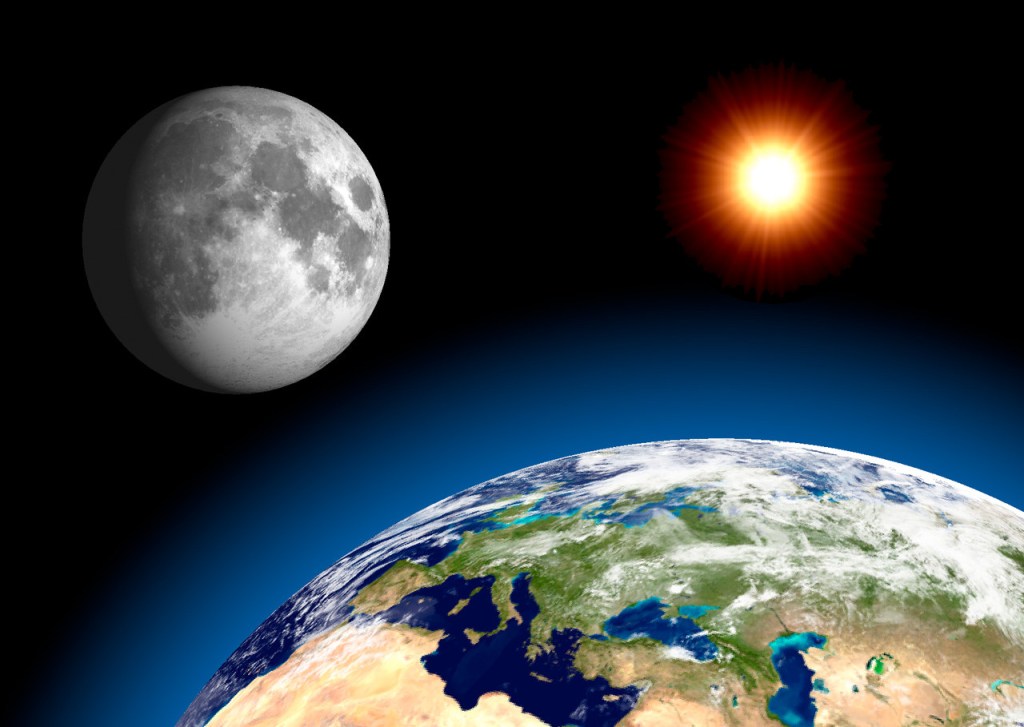
Just like it sounds, a lunisolar calendar combines elements of both lunar and solar calendars. How is this useful? Well, having months that correspond to the phases of the Moon is intuitively practical and appealing. It’s kind of cool to have the full moon around the middle of each month; it feels good to have our sense of time visibly connected to nature.

However, there’s a problem: the lunar month is about 29.5 solar days. So, if you have 12 lunar months (6 at 29 and 6 at 30) that comes to 354 solar days. This means that the end of one year and the beginning of the next will slip back by 11 days per solar year compared to any reference point in the solar calendar such as winter solstice. If instead you decide to have 13 lunar months, you would have 383 or 384 days a year, and thus the end-beginning point of the year would move forward by 18 or 19 days each year compared to the solar time-frame. In either scenario, the important event of the New Year would migrate around the annual calendar over time, diffusing its seasonal relevance, and steamrolling over other events.

The solution to this, in the East Asian context, was to designate the lunar month with the northern hemisphere winter solstice – a solar calendar event – as the 11th lunar month. The winter solstice is usually on December 21st or 22nd, so then you add the rest of the 11th lunar month and the entire 12th lunar month to that, and you get a first day of Chinese New Year occurring on the first new moon that appears between January 21st and February 20th.

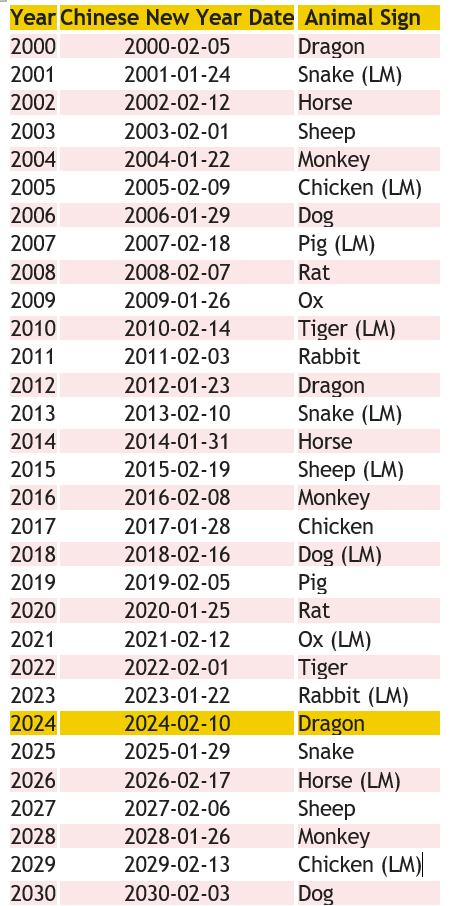
Additional lunar months – leap months – can be inserted as necessary to ensure this happens. Leap months happen approximately once every three years. This means that the date of the new lunisolar year will commonly fall back by 11 days two solar years in a row before jumping forward by 18 or 19 days.

Take a look at the table below to see historical dates for new years calculated according to the above method. The (LM) after the animal sign indicates that this year includes a leap month. (Again, please bear in mind that this is just a handy simplification of a very complex set of interacting processes.)

In any case, whenever it occurs, and whatever you call it, the most important thing is to share quality time with loved ones, get away from the weekly grind, get some rest, and have a wee bit of fun. So, my friends: “Let us be of good cheer, for tomorrow we shall dance and feast!”

Posted in Uncategorized | Tagged , , , , | Leave a comment

Emergency preparedness guide for expats in Taiwan

Hi all! Here’s the link to my latest project. Feel free to share it with friends. A proper blogpost will be coming soon.

PLEASE NOTE THAT THERE IS A NEW VERSION OF THIS GUIDE (V2.0) AVAILABLE, POSTED MARCH 3, 2025. PLEASE GO TO THE MORE RECENT POST.

Posted in Uncategorized | 5 Comments

Walking With History – Part 2: The Battle of Tamsui with the Formosa Files Podcast

Map of the action at Tamsui, 8 October 1884, by Captain Garnot

It was a great pleasure to do these two podcasts with my old friend John Grant Ross, founding member of Camphor Press, and writer of Formosan Odyssey, his first Taiwan book, Taiwan in 100 Books – his best Taiwan book, in my view – and other works. John was also an editorial consultant for my own book, Taiwanese Feet: My walk around Taiwan. It was good to get him out of his dusty town in Chiayi and up here in the bustling metropolis of Taipei for some intelligent conversation and a few beers.

John Ross and Eryk Michael Smith have been doing some fantastic podcasts on the Formosa Files. The format for the two episodes I did with them is a bit different, as they take the form of a “walking and talking tour”. The subject matter is the Battle of Tamsui, October 2nd to 8th, 1884, which was part of the Keelung Campaign of the Sino-French War, August 1884 to April 1885. I thought it would be helpful to add some visuals to augment the listening experience, if only after the fact. So please find below the links to the podcasts, and some maps and pictures of the sites mentioned in them.

A note on photos: Most are unattributed, meaning they are mine or John’s or copyright-free pics from the Internet. But a few of them, the best ones, are from KJ Dickson, an excellent photographer who I have collaborated with on another project. More about that project and a link to KJ’s site at the bottom.

NOTE: Embedded links are not working, so to listen to the podcasts, please just go to the Formosa Files website and scroll down.

https://www.formosafiles.com/

The two episodes are: (These are not links)

S3-E19 – Two Johns Take a “Walking Tour” in Historic Tamsui 淡水 – Part One

S3-E20 – John Groot and John Ross Walk and Talk Historic Tamsui 淡水 – Part Two

Scroll down to S3-E19 first.

Visual references

Here are a few Google Earth images. The first one is an overall look at riverside Tamsui for your reference. The second one is the main area covered in our first podcast, marked with numbers, lines and images. Below that will be some text naming and explaining the numbered locations. Following that will be another marked-up Earth image detailing the sites of the second podcast, followed again by explanatory text.

SATELLITE VIEW OF THE THE MOUTH OF THE TAMSUI RIVER
MAP FOR FIRST PODCAST, EPISODE 19

INFORMATION FOR ABOVE MAP

1: Shalun Beach: Landing site for the French Marines on Oct. 8, 1884

2: Location of French ships shelling Tamsui on Oct. 2, 1884

3: Fisherman’s Wharf. Area inside dotted line is reclaimed land.

4. Mound: Used to signal retreat of French forces just before noon on Oct. 8

5. Position of Qing underwater barrier of sunken barges (brown), submerged sea-mines (red) with their detonation cables stretching back to the sea-mine engineers’ camp.

6. Fort Blanc (White Fort), Qing defensive and artillery position.

7. Sea-mine engineers’ camp

8. Fort Neuf (New Fort): Main Qing encampment and artillery position in Tamsui.

9. Wadianbi: Small bridge over a stream where the French were finally stopped and forced to retreat.

10. Danjiang Bridge, under construction

(THE ABOVE NUMBERS DO NOT REFER TO THE MAP DIRECTLY BELOW)

——————————————————————————————————–

MAP FOR SECOND PODCAST, EPISODE 20

INFORMATION FOR MAP ABOVE

1. Tamsui customs wharf

2. Hobe Port

3. The Red Fort aka Fort San Domingo

4. Aletheia University (Zhenli Daxue) formerly Oxford College. On Zhenli Street (upper left dotted line), and next to many other historical buildings.

5. Tamsui Customs Officer’s Residence (Little White House)

6. Mackay Street (lower right dotted line) and Mackay’s first residence in Tamsui (line on right under number)

7. Tamsui Presbyterian Church, next to the Tamsui Mackay Clinic

8. The triangular park with the statue of George Leslie Mackay

9. Fuyou Mazu Temple

————————————————————————————————————————–

A FEW CLARIFICATIONS

There are a few points as follows to add to the second podcast, S3 E20, for greater accuracy and context. The numbers are the times of the relevant sections in the podcast.

9:18 Re: HMS Cockchafer: A cockchafer is a kind of beetle.

10:34 The English name for Zhenli Daxue is Aletheia University. But most people in Tamsui call it Zhenli University.

14:02 There were no reported attacks on foreign residents in Tamsui during the battle. However, after the battle, there was a wave of wider anti-foreign sentiment, and threats made against Mackay, who felt compelled to move to Hong Kong until April 1885, when he returned to Tamsui.

NOW, HERE ARE SOME PICTURES OF THE SITES MENTIONED IN THE PODCAST

French warships bombard the Chinese coastal defences at Tamsui, 2 October 1884; from left to right the gunboat Vipère, the ironclad Triomphante, the cruiser d’Estaing and the ironclad La Galissonnière.

Myself looking historical

The Mound: Art on the Tamsui LRT. (Photo by KJ Dickson)

The Marines’ landing site on Shalun Beach (Photo by KJ Dickson)

An artist’s impression of the landing. More LRT art. (Photo by KJ Dickson)

How Shalun Beach usually looks.

Commemorative art near the site of the river mines barrier. Bridge construction visible in background.

Commemorative art at Wadianbi, where the French were forced to retreat.

Fort San Domingo: aka the Red Fort

Oxford College, on the campus of present-day Aletheia University

Tamsui Customs Officer’s Residence aka Little White House

Shell crater from October 2nd, 1884 at Little White House

Top end of Mackay Street

George Leslie Mackay’s first residence in Tamsui in 1872

Tamsui Presbyterian Church and the original Mackay Clinic (Photo by KJ Dickson)

From left to right: French Admiral Amédée Courbet, commander of the Far East Squadron; John Grant Ross, content creator; and Liu Mingchuan, Imperial Commissioner (and later governor) of Taiwan.

A SPECIAL THANKS TO KEN DICKSON

Going by the photographer’s name “KJ Dickson”, Ken is an old friend, a lovely fellow, and a great photographer. His pictures look far better than the pale renderings of them I’ve managed here. Check out his professional website by clicking on the link below:

https://www.lookthroughthelens.com/

Ken and I collaborated on an article on the Battle of Tamsui for Centered on Taipei, the magazine of the Community Services Center. The link to that article is here:

The article starts on page 17.

ENDING NOTE: The next blog post will be a special one about the family of Dr. Hong-Ming Cheng, who have deep historical roots in Tamsui.

And finally, a shameless plug for my book: Taiwanese Feet: My walk around Taiwan. You can find it on Amazon. Or email me at taiwanese DOT feet AT gmail DOT com.

See you next time!

——————————————————————————————-

Posted in Uncategorized | Leave a comment

The Battle of Tamsui: An article for Centered on Taipei

It was a great pleasure to work with Ken Dickson, photographer, and the entire editorial team of Centered On Taipei, the magazine of the Community Services Center in Taipei. Please follow the link below to read the article on pages 16-20.

https://www.communitycenter.org.tw/wp-content/uploads/2022/09/CoT_10_2022-e-1.pdf

The Battle of Tamsui, Oct. 2-8 1884, was part of the Sino–French War.

————————————————————————————————————————-

Posted in Uncategorized | Leave a comment